



What's Happening?
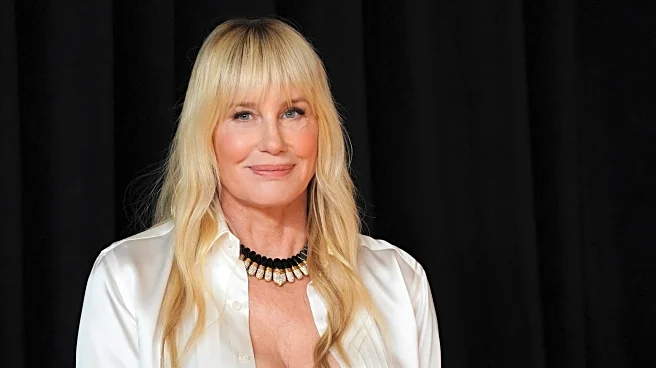
Daryl Hannah has publicly criticized the FX limited series 'Love Story: John F. Kennedy Jr. & Carolyn Bessette' for its portrayal of her as a villainous character. In a guest essay for the New York Times, Hannah expressed her discontent with the series,
which she claims inaccurately depicts her as a 'coke-snorting, heirloom-desecrating, funeral-crashing adversary.' Hannah, who dated John F. Kennedy Jr. in the early 1990s, argues that the series uses her character as a narrative device to create tension, which she finds misleading and damaging. She refutes the series' portrayal of her as someone who engaged in drug use and inappropriate behavior, stating that these actions are false and not representative of her life or relationship with Kennedy. The series, which has become FX's most-watched limited series on streaming, has led to Hannah receiving hostile messages from viewers who believe the dramatization to be factual.
Why It's Important?
The controversy surrounding the FX series highlights the ethical challenges of dramatizing real-life events and individuals. Hannah's criticism underscores the potential harm that fictional portrayals can inflict on a person's reputation, especially when audiences may not distinguish between dramatization and reality. This situation raises questions about the responsibilities of creators in balancing storytelling with factual accuracy, particularly when dealing with public figures. The series' success on streaming platforms also reflects the public's interest in stories about the Kennedy family, but it also suggests a need for viewers to critically assess the content they consume. The backlash from Hannah could prompt discussions about the portrayal of women in media and the impact of gendered narratives that pit women against each other.
What's Next?
It remains to be seen how FX and the creators of 'Love Story' will respond to Hannah's criticisms. The network may face pressure to address the concerns raised about the series' accuracy and its impact on Hannah's reputation. Additionally, this situation could lead to broader industry discussions about the ethical considerations in adapting real-life stories for entertainment. As the series continues to attract viewers, the conversation around its portrayal of historical figures may influence future projects that seek to dramatize real events. Stakeholders, including producers and networks, might consider implementing more rigorous fact-checking processes or disclaimers to clarify the fictional nature of such portrayals.
Beyond the Headlines
Hannah's critique of the series also touches on the broader issue of how media representations can shape public perceptions and collective memory. In an era where digital content is widely accessible, the line between fact and fiction can become blurred, leading to potential misunderstandings about historical events and figures. This case highlights the importance of media literacy and the need for audiences to critically engage with the content they consume. Furthermore, the portrayal of women in media as adversaries or obstacles to male protagonists reflects ongoing gender biases that can perpetuate stereotypes and influence societal attitudes.