



What's Happening?
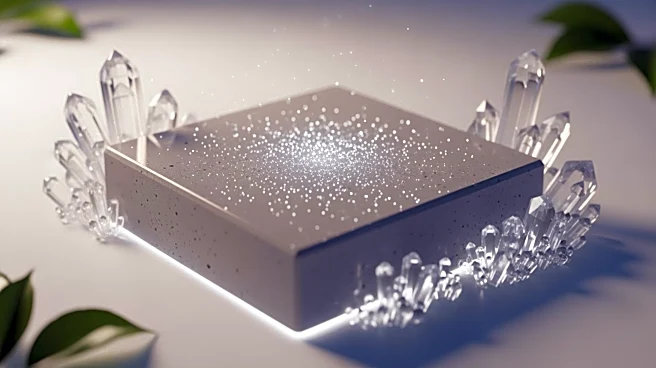
Researchers are investigating a polymer made from calcium aluminate and water glass as a potential substitute for traditional cement. The study explores the chemical reactions and structural properties of this polymer, which forms through the interaction
of calcium aluminate cements (CACs) with water glass. The research highlights the role of sodium or potassium hydroxide in activating the mixture, leading to solidification. The study also examines the optimal ratios of silicon to aluminum and sodium to silicon, which are crucial for achieving desired compressive strength and setting times. This alternative material could offer a more sustainable option for construction, given the environmental impact of conventional cement production.
Why It's Important?
The development of alternative cement materials is critical in addressing the environmental challenges posed by traditional cement production, which is a significant source of carbon emissions. By exploring polymers like calcium aluminate and water glass, researchers aim to reduce the carbon footprint of the construction industry. This innovation could lead to more sustainable building practices and contribute to global efforts to combat climate change. Additionally, the study's findings on the chemical properties and optimal compositions of these materials could pave the way for further advancements in eco-friendly construction technologies.
What's Next?
Further research and development are needed to refine the properties of this polymer and assess its practical applications in construction. This includes large-scale testing and evaluation of its durability, cost-effectiveness, and environmental benefits compared to traditional cement. Collaboration between researchers, industry stakeholders, and policymakers will be essential to facilitate the adoption of such sustainable materials in the construction sector. As the demand for greener building solutions grows, this research could play a pivotal role in shaping the future of construction materials.