


What's Happening?
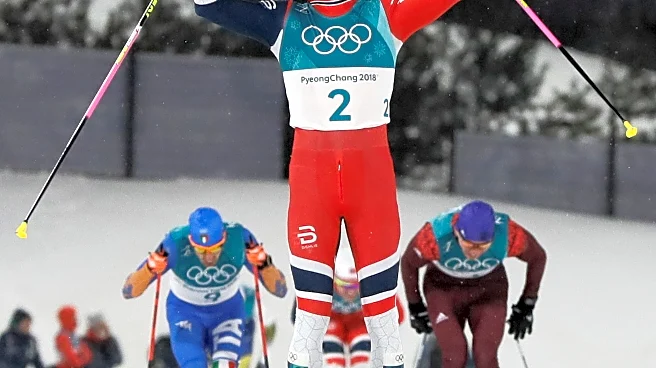
Norwegian biathlete Sturla Holm Laegreid secured his second bronze medal at the Milan Cortina Olympics, following a personal revelation earlier in the week. During a post-race interview, Laegreid admitted to being unfaithful to his girlfriend, a confession that drew significant attention. Despite the personal turmoil, Laegreid managed to focus on his performance, finishing behind gold medalist Quentin Fillon Maillet of France and silver medalist Vetle Sjaastad Christiansen of Norway in the sprint race. His earlier confession was criticized for overshadowing teammate Johan-Olav Botn's gold medal win in the 20-kilometer individual race. Laegreid expressed regret for the timing of his revelation, acknowledging it detracted from the team's achievements.
Why It's Important?
Laegreid's situation highlights the intersection of personal and professional lives in high-stakes sports environments. His ability to perform under pressure, despite personal challenges, underscores the mental resilience required in competitive sports. The incident also raises questions about the impact of personal disclosures on team dynamics and media focus. For the U.S., the event was significant as Campbell Wright, a dual citizen from New Zealand, aimed to secure the country's first Olympic medal in biathlon. Although Wright did not medal, his performance remains a point of interest for future competitions.
What's Next?
Laegreid's future competitions will likely be scrutinized for both his athletic performance and personal life. The Norwegian team may need to address the balance between personal disclosures and team focus in future events. For the U.S., Campbell Wright's progress will be closely watched as he continues to develop as a promising biathlete. His near-podium finish suggests potential for future success, which could inspire increased interest and investment in biathlon within the U.S.
Beyond the Headlines
The incident with Laegreid may prompt discussions on the role of media in athletes' personal lives and the ethical considerations of reporting personal confessions. It also highlights the pressures athletes face in maintaining public personas while managing personal challenges. This could lead to broader conversations about mental health support for athletes and the responsibilities of sports organizations in providing such resources.