
What's Happening?
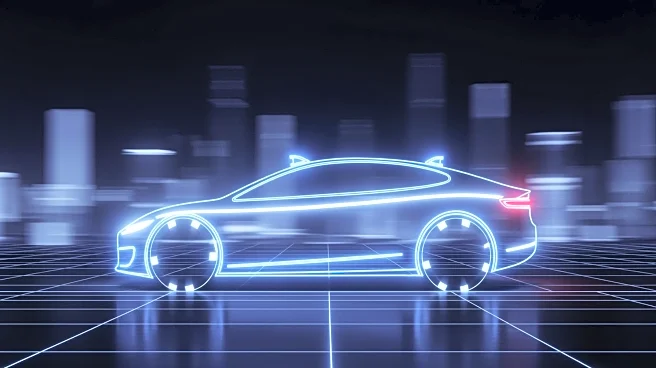
Tesla has released its latest Full Self-Driving (FSD) software, version 14, which is drawing significant attention from investors as the company moves closer to achieving fully autonomous driving capabilities. The new software version demonstrates smoother operation and improved capabilities compared to earlier versions, with real-world performance data showing it can travel over 9,000 miles between critical disengagements. Tesla has also begun testing driverless Model Y robotaxis in Austin, Texas, without human safety monitors on board. This marks a significant step in Tesla's autonomous vehicle ambitions, as the company aims to expand its robotaxi platform. Currently, about 12% of Tesla's U.S. fleet subscribes to the FSD service, generating
substantial revenue. However, the software still requires human supervision, and regulatory approval for fully autonomous operation is pending.
Why It's Important?
The development of Tesla's autonomous driving technology is crucial for the company's future growth and market valuation. Investors are betting on the rapid expansion of Tesla's robotaxi platform, which is expected to unlock substantial earnings growth. The success of Tesla's autonomous vehicles could significantly impact the automotive industry, potentially transforming transportation and mobility services. However, the technology faces regulatory scrutiny and safety challenges, as evidenced by reported incidents involving Tesla's supervised robotaxis. The competition in the autonomous vehicle market is intensifying, with companies like Waymo expanding their driverless services. Tesla's advancements in this field could set a precedent for the industry, influencing regulatory standards and consumer acceptance of autonomous vehicles.
What's Next?
Tesla plans to continue expanding its robotaxi service, with further testing and deployment of driverless vehicles in more cities by 2026. The company is working on validating its unsupervised FSD technology, with predictions of robotaxis without safety drivers in Austin within weeks. As Tesla progresses, it will need to address regulatory challenges and ensure the safety and reliability of its autonomous systems. The outcome of these efforts will likely influence the broader adoption of autonomous vehicles and shape the future of urban transportation.