



What's Happening?
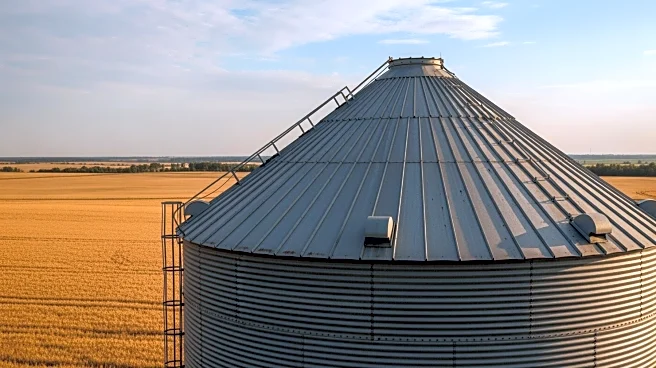
The growth of U.S. grain storage capacity has stalled since 2020, despite continued increases in crop production. From 2000 to 2019, storage capacity expanded in tandem with production, but recent years have seen negligible growth in storage infrastructure. This stagnation has led to high utilization rates, with 80% of on-farm storage capacity used by major crops as of December 2025. The lack of new storage capacity raises concerns about potential bottlenecks in the grain supply chain, which could affect market prices and farmer profitability. The situation is exacerbated by transportation challenges, such as low water levels on the Mississippi River, which have impacted crop prices.
Why It's Important?
The stagnation in grain storage capacity growth poses significant
challenges for the U.S. agricultural sector. As crop production continues to rise, insufficient storage capacity could lead to inefficiencies in the supply chain, affecting the ability of farmers to store and market their crops effectively. This could result in increased costs and reduced profitability for farmers, as well as potential disruptions in the availability of grain for end-users. The situation highlights the need for investment in storage infrastructure to support the growing agricultural output and ensure the stability of the U.S. grain market.
What's Next?
Addressing the storage capacity issue will require strategic investments in infrastructure to accommodate future production growth. Stakeholders in the agricultural sector, including farmers, grain merchants, and policymakers, will need to collaborate to identify solutions that enhance storage capacity and improve supply chain efficiency. This may involve exploring alternative storage methods and technologies, as well as addressing transportation challenges that impact the movement of grain. The industry will also need to consider the long-term implications of storage constraints on market dynamics and farmer profitability.