



What's Happening?
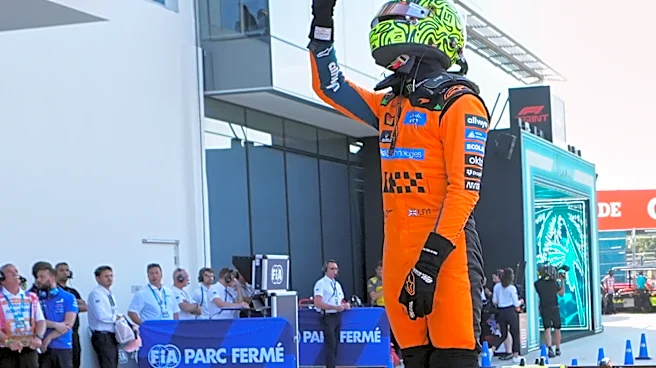
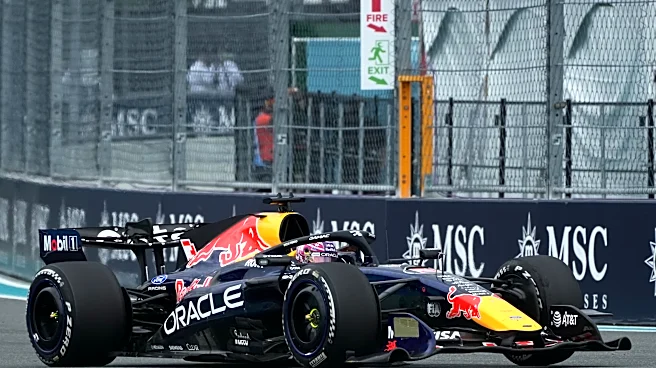
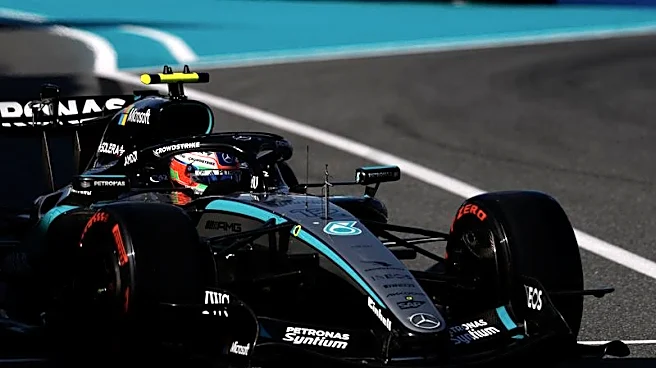
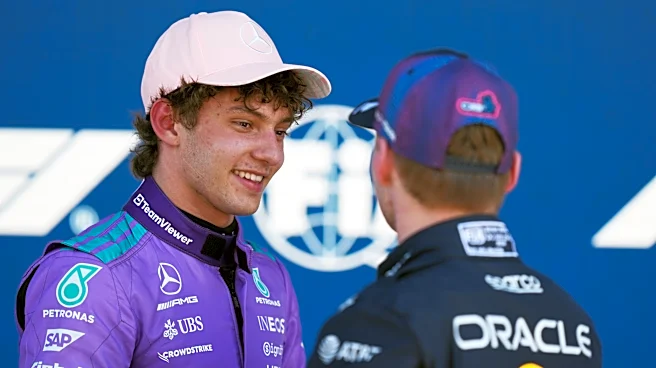
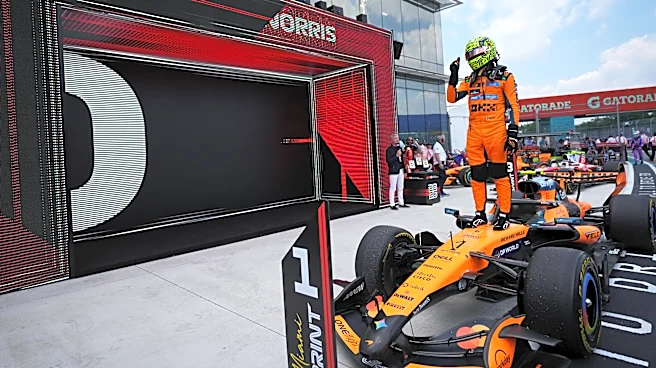
Kimi Antonelli, a young driver for Mercedes, achieved his third consecutive Formula 1 victory at the Miami Grand Prix, defeating reigning World Champion Lando Norris. The race, held at the Miami International Autodrome, saw Antonelli recover from a slow
start and utilize an effective undercut strategy to surpass Norris. Despite a gearbox scare, Antonelli maintained his lead, ultimately extending his advantage in the championship standings. This victory marks Antonelli as the first driver to win his first three races consecutively from pole positions. Mercedes team principal Toto Wolff praised Antonelli's performance, likening it to his earlier successes in karting and Formula 4.
Why It's Important?
Antonelli's victory is significant as it highlights the emergence of a new talent in Formula 1, potentially reshaping the competitive landscape. His success underscores Mercedes' strategic prowess and technical capabilities, reinforcing their position as a dominant force in the sport. For Lando Norris and McLaren, the race was a mixed outcome, as they secured a podium finish but missed out on a potential win. The results could influence team strategies and driver dynamics as the season progresses, with Antonelli's performance setting a high benchmark for competitors.
What's Next?
As the season continues, teams will likely analyze Antonelli's strategies and performance to adapt their approaches. The next races will be crucial for drivers like Norris, who aim to reclaim their standing in the championship. Mercedes will focus on maintaining their momentum, while other teams may seek to close the gap through technical improvements and strategic adjustments. The evolving dynamics could lead to intensified competition and shifts in the championship standings.
Beyond the Headlines
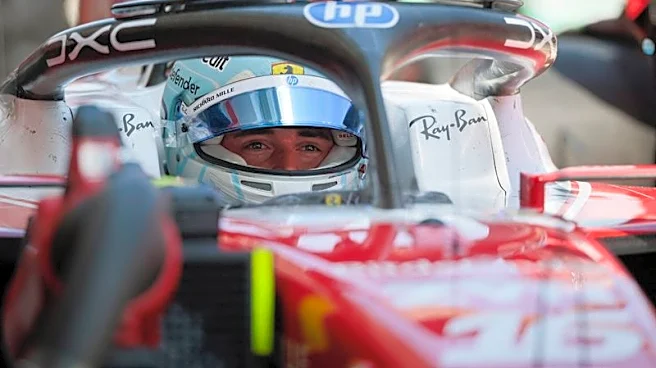
Antonelli's rise in Formula 1 could inspire a new generation of drivers, emphasizing the importance of nurturing young talent in motorsports. His success may also prompt discussions about the role of strategy and technology in achieving competitive advantages. Additionally, the race highlighted the challenges faced by other drivers, such as Charles Leclerc, whose errors and subsequent penalties affected their standings, illustrating the high stakes and pressures inherent in the sport.