





What's Happening?
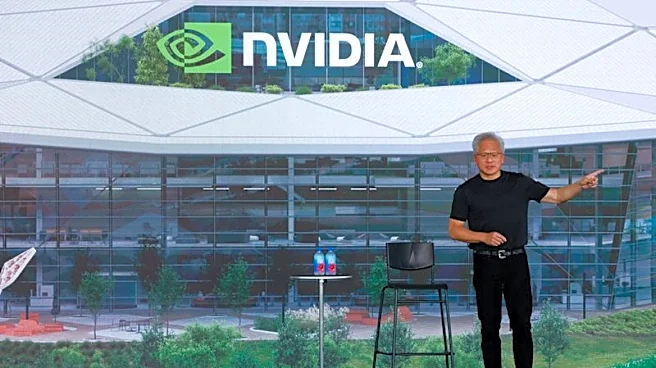
Nvidia's CEO, Jensen Huang, has identified a significant surge in demand for artificial intelligence (AI), driven by advancements in agentic AI. This form of AI allows for complex, multi-step processes, enabling tasks that go beyond simple question-and-answer
interactions. Huang emphasizes that agentic AI can perform productive and valuable work, transforming everyday tasks by automating processes that would typically require significant time and effort. For instance, AI can now efficiently handle tasks such as researching, analyzing, and summarizing data, which traditionally would take an office worker over an hour, in just a few minutes. This capability is seen as a game-changer for businesses, offering tangible benefits and efficiencies.
Why It's Important?
The rise of agentic AI represents a pivotal shift in how businesses can leverage technology to enhance productivity and efficiency. By automating complex tasks, companies can reduce labor costs and improve operational efficiency, potentially leading to significant economic benefits. For Nvidia, this surge in AI demand could translate into sustained growth, as the company is a leading provider of AI technology. However, the competitive landscape is evolving, with more tech companies developing their own chips, which could impact Nvidia's market share. The broader implications for industries are profound, as AI continues to integrate into various sectors, reshaping job roles and business processes.
What's Next?
As demand for AI continues to grow, Nvidia and other tech companies are likely to invest further in developing advanced AI technologies. This could lead to increased competition in the AI chip market, as companies seek to capitalize on the growing need for AI solutions. Businesses across various sectors may also begin to adopt AI more widely, integrating it into their operations to gain a competitive edge. The ongoing development of AI technologies will likely prompt discussions around ethical considerations and the impact on employment, as automation becomes more prevalent.