




What's Happening?
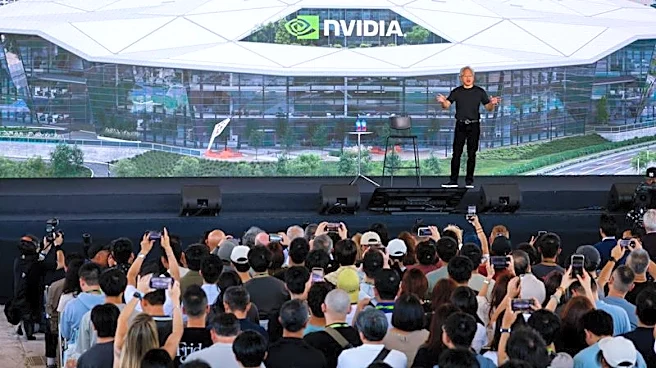
NVIDIA and TSMC are collaborating to integrate AI technologies into semiconductor manufacturing processes. This partnership aims to address the complexities of bringing advanced chips from design to high-volume production. NVIDIA's CUDA-X libraries and AI models
are being utilized to accelerate TSMC's workloads across various stages, including lithography, transistor simulation, and process control. The use of AI is expected to improve turnaround time, energy efficiency, and operational productivity in TSMC's advanced fabrication facilities. The collaboration also involves the use of NVIDIA's Metropolis platform and TAO Toolkit to enhance defect inspection, allowing for more accurate detection of nanometer-scale defects. This initiative is part of a long-standing partnership between the two companies, aimed at pushing the limits of computing and supporting the next generation of semiconductor technologies.
Why It's Important?
The integration of AI into semiconductor manufacturing is crucial as the industry faces increasing demand for more advanced and efficient chips, particularly in the context of AI and data center applications. By improving the efficiency and accuracy of manufacturing processes, NVIDIA and TSMC are setting a new standard for the industry, potentially leading to faster production cycles and reduced costs. This development is significant for the U.S. technology sector, as it could enhance the competitiveness of American companies in the global semiconductor market. Additionally, the advancements in defect detection and process optimization could lead to higher yields and better quality products, benefiting both manufacturers and consumers.
What's Next?
As NVIDIA and TSMC continue to refine their AI-driven manufacturing processes, other semiconductor companies may follow suit, adopting similar technologies to remain competitive. The success of this collaboration could lead to further innovations in chip design and production, potentially influencing industry standards and practices. Stakeholders, including technology companies and investors, will likely monitor the outcomes of this partnership closely, as it could impact market dynamics and investment strategies in the semiconductor sector.