
What's Happening?
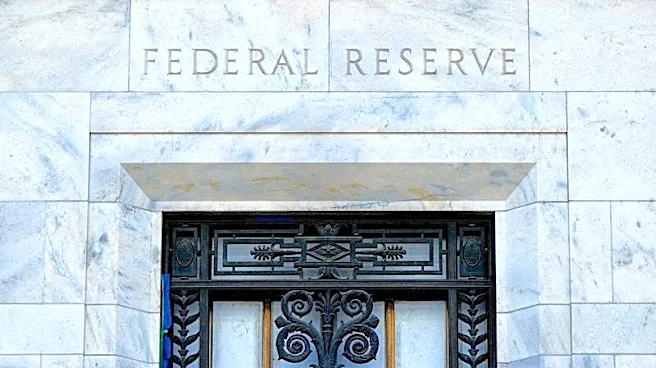
The Federal Reserve has decided to keep its benchmark overnight interest rate in the range of 3.50%-3.75%, citing concerns over inflation. This decision comes as the U.S. labor market shows signs of stability,
with low levels of layoffs and a decrease in the number of people receiving unemployment benefits. The Labor Department reported a slight increase in initial claims for state unemployment benefits, rising by 10,000 to a seasonally adjusted 200,000 for the week ending May 2. Despite this increase, the labor market remains robust, with nonfarm payrolls expected to have increased by 62,000 jobs in April. Economists are cautious about potential risks due to disruptions in oil shipments caused by the ongoing U.S.-Israel conflict with Iran.
Why It's Important?
The Federal Reserve's decision to maintain interest rates reflects confidence in the current stability of the U.S. labor market. This stability is crucial for economic growth, as it suggests that the economy can withstand external shocks, such as the disruptions in oil supply due to geopolitical tensions. The steady labor market also indicates that there is no immediate need for interest rate cuts, which could have been considered if there were signs of significant job losses or economic downturn. The Fed's stance is likely to influence financial markets, with expectations that interest rates will remain steady into 2027, providing a predictable environment for investors and businesses.
What's Next?
The Federal Reserve will continue to monitor economic indicators, particularly inflation and employment data, to assess the need for any future adjustments in monetary policy. The upcoming employment report for April will provide further insights into the labor market's health. Additionally, the ongoing geopolitical tensions and their impact on oil prices will be closely watched, as they could influence inflation and economic stability. Stakeholders, including businesses and policymakers, will need to remain vigilant and adaptable to any changes in the economic landscape.