



What's Happening?
The NITI Aayog's National Mineral Mission panel has emphasized the need for India to become self-sufficient in critical minerals. A recent meeting chaired by DK Singh at Singareni Bhavan highlighted the necessity for both government and private sectors
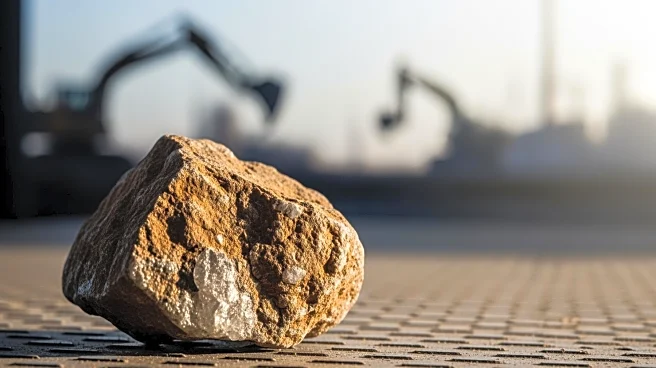
to collaborate in the exploration and utilization of these minerals. The panel discussed the current state of critical mineral resources in India, which are essential for sectors like solar power, battery-operated vehicles, electronics, and defense. Despite having these resources, India relies heavily on imports due to insufficient mining activities. The meeting also included discussions on potential partnerships, such as the invitation from Brazil's Companhia Brasileira de Lítio (CBL) to the Singareni Collieries Company (SCCL) to join its lithium mining operations.
Why It's Important?
The push for self-reliance in critical minerals is crucial for India's economic and industrial growth. These minerals are vital for the development of renewable energy technologies and the electronics industry, which are key to India's future economic strategy. By reducing dependency on imports, India can enhance its energy security and foster innovation in high-tech industries. This move could also lead to job creation and technological advancements within the country. The collaboration between government and private sectors is expected to optimize resource utilization and drive sustainable development.
What's Next?
The next steps involve strategic planning and implementation of mining operations to tap into India's critical mineral reserves. The government and private companies are expected to outline specific roles and responsibilities to ensure efficient resource extraction. Additionally, potential international collaborations, like the one proposed by CBL, could be explored to enhance India's capabilities in critical mineral mining. These efforts will likely be monitored and adjusted based on the evolving demands of the domestic and global markets.
Beyond the Headlines
The initiative to become self-reliant in critical minerals also raises questions about environmental sustainability and regulatory frameworks. As mining activities increase, there will be a need for stringent environmental regulations to mitigate ecological impacts. Furthermore, the ethical implications of international partnerships and the geopolitical dynamics of mineral resource control will need careful consideration. Long-term, this strategy could position India as a significant player in the global critical minerals market, influencing international trade and economic policies.