







What's Happening?
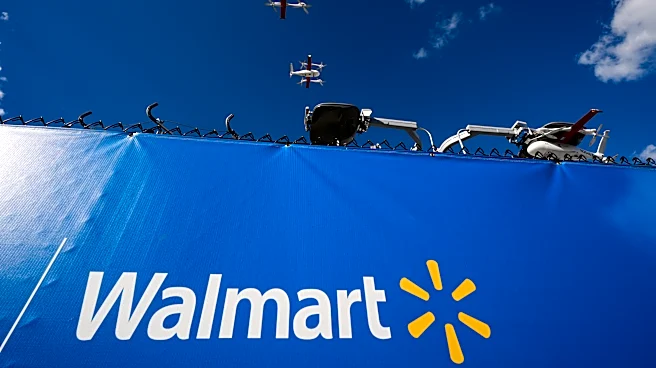
Walmart, the largest retailer in the U.S., reported its fiscal 2027 first-quarter earnings, revealing a significant impact from rising fuel costs due to the ongoing conflict in Iran. The company achieved a 7.3% increase in revenue, reaching $177.8 billion,
but faced a $175 million hit to its operating income to maintain stable prices for consumers. Despite strong sales, the company issued a cautious outlook for the second quarter, projecting adjusted earnings per share between $0.72 and $0.74, below Wall Street expectations. The conflict in Iran has disrupted global energy corridors, leading to increased fuel costs that Walmart absorbed to avoid passing them onto consumers.
Why It's Important?
The situation highlights the vulnerability of major retailers like Walmart to geopolitical events and their impact on global supply chains. Rising fuel costs not only affect transportation and logistics but also have a cascading effect on consumer prices and inflation. Walmart's decision to absorb these costs reflects its commitment to maintaining consumer trust but also underscores the challenges of sustaining profit margins in a volatile economic environment. The company's cautious outlook signals potential price increases in the future, which could affect consumer spending and the broader retail market.
What's Next?
Walmart's future strategies will likely focus on balancing cost absorption with necessary price adjustments if fuel costs remain high. The company may also explore further efficiencies in its supply chain and logistics to mitigate the impact of rising costs. Stakeholders, including investors and consumers, will closely watch Walmart's performance in the coming quarters, particularly its ability to manage costs and maintain competitive pricing. The broader retail industry may also experience shifts as companies adjust to the ongoing geopolitical and economic challenges.