
What's Happening?
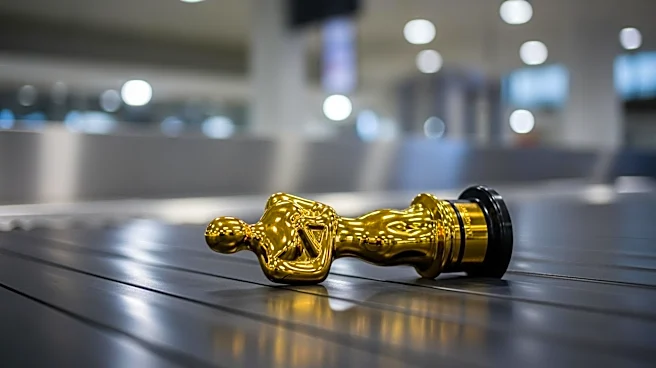
The Oscar statuette awarded to the documentary 'Mr. Nobody Against Putin' went missing after being confiscated by TSA at John F. Kennedy International Airport. Co-director Pavel Talankin was traveling
with the award when a TSA agent deemed it a potential weapon and required it to be checked in with luggage. The Oscar was placed in a cardboard box for Talankin's Lufthansa flight but did not arrive at its destination. The incident raised questions about whether Talankin, a Russian emigrant, was treated differently due to his background. The Oscar was eventually located by Lufthansa after an internal review and returned to Talankin.
Why It's Important?
This incident highlights the challenges faced by filmmakers and artists when traveling with valuable and symbolic items like awards. It underscores potential biases in security procedures, especially for individuals from diverse backgrounds. The situation also draws attention to the logistical and security issues involved in transporting prestigious awards, which can have significant emotional and professional value for recipients. The resolution of the case by Lufthansa demonstrates the importance of airline accountability and customer service in resolving such issues.
What's Next?
Following the recovery of the Oscar, there may be discussions within the film industry and among security agencies about the protocols for handling valuable items during travel. This could lead to revised guidelines to prevent similar incidents in the future. Additionally, the incident may prompt further examination of how security measures are applied to individuals based on their nationality or language proficiency, potentially influencing policy changes to ensure fair treatment for all travelers.
Beyond the Headlines
The incident with Talankin's Oscar also sheds light on the broader cultural and political context of the documentary 'Mr. Nobody Against Putin,' which critiques the Russian regime. The film's success and the subsequent travel incident may amplify its message and bring further attention to the issues it addresses. This could influence public discourse on international relations and the role of art in political activism.