
What's Happening?
President Trump has issued an executive order requiring HieFo Corporation, a Chinese-controlled company, to divest its recently acquired semiconductor assets from Emcore, a New Jersey-based manufacturer.
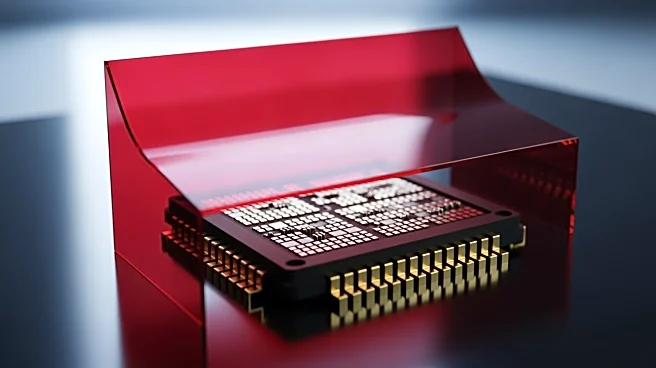
The acquisition, valued at $2.9 million, involved critical semiconductor manufacturing facilities. The U.S. Treasury Department, through the Committee on Foreign Investment in the United States (CFIUS), identified significant national security risks associated with the transaction. The assets include indium phosphide chips, which are crucial for various applications, including defense systems. The executive order mandates HieFo to divest these assets within 180 days and restricts access to Emcore's technical information immediately. This action is part of the Trump administration's ongoing efforts to scrutinize foreign investments in critical U.S. industries.
Why It's Important?
The divestment order underscores the U.S. government's heightened vigilance over foreign acquisitions of critical technology assets, particularly those involving Chinese-controlled entities. The move reflects concerns about potential threats to national security through the transfer of sensitive technology. The semiconductor industry is vital to the U.S. economy and defense, and maintaining control over these resources is crucial amid global supply chain challenges. This decision also highlights the geopolitical tensions between the U.S. and China, particularly in the realm of advanced technology and intellectual property. The action aims to protect U.S. technological assets from foreign influence and ensure national security.
What's Next?
HieFo Corporation must comply with the divestment order within the stipulated 180-day period. The company is expected to face challenges in unwinding the acquisition and finding suitable buyers for the assets. The U.S. government will likely continue to monitor and regulate foreign investments in critical sectors, potentially leading to further scrutiny of similar transactions. The decision may also prompt diplomatic responses from China, as it reflects ongoing tensions over technology transfers. The situation could influence future U.S. policies on foreign investments and national security.
Beyond the Headlines
This development raises broader questions about the balance between economic globalization and national security. The U.S. government's intervention in this case highlights the complexities of regulating foreign investments in a globalized economy. It also underscores the strategic importance of semiconductor technology in modern defense and commercial applications. The decision may set a precedent for future actions against foreign acquisitions deemed a threat to national security, potentially affecting international business relations and investment strategies.