





What's Happening?
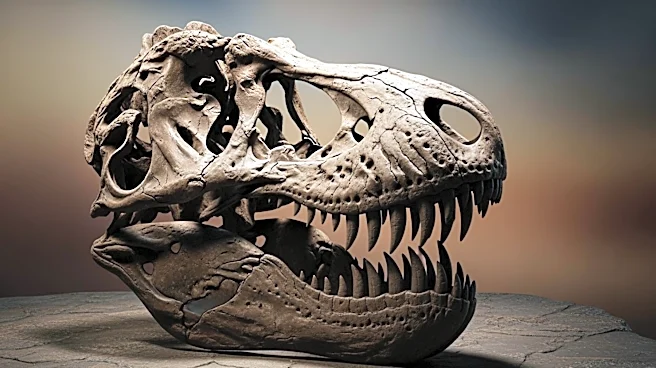
Sotheby's is preparing to auction a 67-million-year-old Tyrannosaurus rex fossil, nicknamed 'Gus', with an estimated value between $20 million and $30 million. This auction follows the sale of a Stegosaurus fossil to Ken Griffin for $44.6 million, marking
the highest price ever paid for a fossil. 'Gus' was discovered on a ranch in South Dakota and is considered one of the most complete T. rex skeletons found. The auction is scheduled for July 14, and Sotheby's anticipates a broad range of potential buyers, many of whom may choose to display the fossil in museums or public exhibits.
Why It's Important?
The auction of 'Gus' highlights the growing interest and investment in paleontological artifacts among the world's elite. This trend underscores the increasing value placed on rare and scientifically significant fossils, which are now seen as both cultural treasures and financial assets. The sale could influence the fossil market by setting new benchmarks for pricing and attracting more private collectors. Additionally, the auction reflects a broader cultural fascination with dinosaurs and natural history, potentially boosting public interest and educational opportunities in these fields.
What's Next?
Following the auction, the outcome could lead to further interest in fossil auctions, potentially driving up prices for future sales. Museums and educational institutions may seek partnerships with private collectors to ensure public access to such significant artifacts. The auction's results could also prompt discussions about the ethical considerations of private ownership of fossils, particularly those of great scientific importance.