




What's Happening?
Despite significant advancements in autonomous vehicle technology, fully self-driving cars remain years away from becoming a reality. The concept of Level 5 autonomy, where vehicles operate without human intervention, is still elusive. Companies like
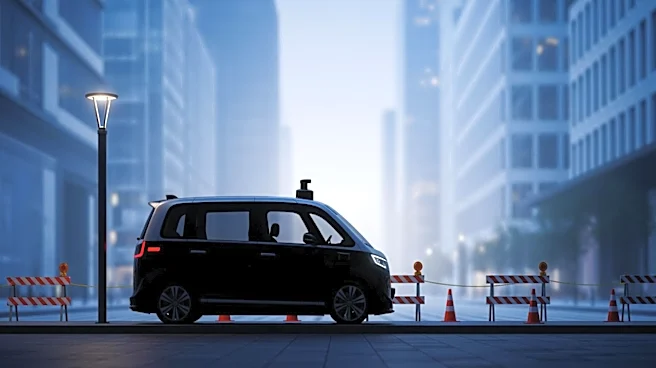
Tesla, Waymo, Cruise, and Baidu Apollo are at the forefront of this technology, yet they face numerous challenges. Recent incidents, such as a system malfunction in Wuhan, China, where driverless taxis stopped on highways, highlight the current limitations. Additionally, a class-action lawsuit against Tesla claims the company misrepresented its vehicles as fully autonomous. Predictions from the mid-2010s that envisioned a driverless world by 2020 have not materialized, with experts now estimating that fully autonomous vehicles may not be available until around 2035.
Why It's Important?
The delay in achieving fully autonomous vehicles has significant implications for the automotive industry, urban planning, and public safety. While companies continue to invest heavily in this technology, the gap between current capabilities and full autonomy affects consumer trust and regulatory frameworks. The potential benefits of self-driving cars, such as reduced traffic accidents and increased mobility for non-drivers, remain unrealized. Moreover, the ongoing development and testing of autonomous vehicles raise ethical and legal questions about liability and safety standards. As the industry progresses, stakeholders must address these challenges to ensure the safe integration of self-driving cars into society.
What's Next?
The path to fully autonomous vehicles involves overcoming technical hurdles, such as improving vehicle responses to complex driving scenarios and ensuring robust cybersecurity measures. Companies will continue to refine their technologies, with ongoing testing and pilot programs. Regulatory bodies may need to update policies to accommodate advancements in autonomous driving. Public perception and acceptance will also play a crucial role in the adoption of self-driving cars. As the technology evolves, collaboration between manufacturers, policymakers, and consumers will be essential to address safety concerns and build trust in autonomous vehicles.