
What's Happening?
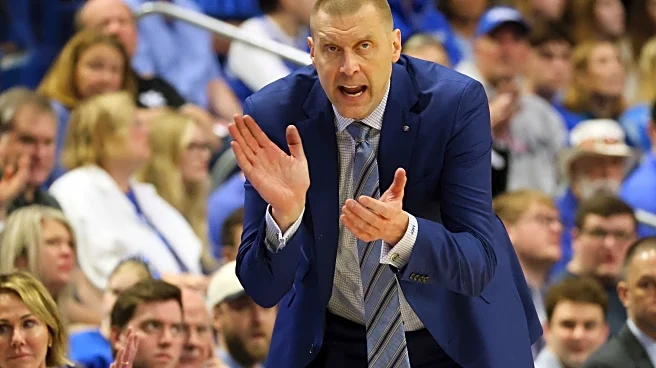
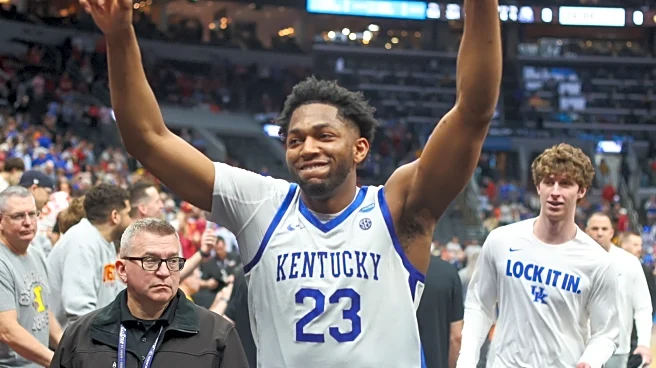
The NCAA Tournament's first-round games have showcased a significant disparity between power conference teams and others, with an average margin of victory nearing 19 points. This trend was evident in a game where Kentucky, with a roster valued over $20
million in NIL deals, narrowly defeated Santa Clara in overtime. The game was marked by controversial officiating decisions, including a timeout awarded to Kentucky and a missed traveling violation. The tournament's expansion, as indicated by NCAA President Charlie Baker, is expected to continue, potentially exacerbating the gap between top-tier and mid-major teams.
Why It's Important?
The widening gap in college basketball raises concerns about the competitive balance and the integrity of the NCAA Tournament. As power conference teams continue to dominate, the excitement and unpredictability traditionally associated with March Madness may diminish. This trend could impact fan engagement and the financial dynamics of college sports, as smaller programs struggle to compete against well-funded teams. The ongoing expansion of the tournament may further dilute the quality of competition, leading to more predictable outcomes and less interest from audiences.
What's Next?
With the NCAA planning to expand the tournament, stakeholders, including universities and athletic conferences, may need to address the growing disparity. Discussions around NIL deals and their impact on competitive balance are likely to intensify. Additionally, the NCAA may face pressure to implement measures that ensure a more level playing field, such as revisiting the distribution of resources or adjusting tournament structures. The reactions from fans, media, and college sports analysts will be crucial in shaping the future of the tournament.