






What's Happening?
Cellular Intelligence, a U.S.-based biotechnology company supported by tech entrepreneur Mark Zuckerberg, has acquired the global rights to Novo Nordisk's cell therapy program for Parkinson's disease. This acquisition comes after Novo Nordisk decided
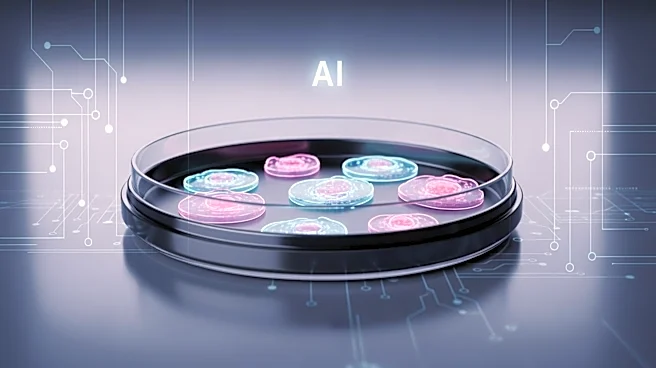
to discontinue its cell therapy operations, which led to the layoff of 250 employees. The program involves an allogeneic pluripotent stem cell-derived dopaminergic progenitor therapy, currently in a Phase I/II clinical trial. The U.S. Food and Drug Administration (FDA) has granted fast-track designation and investigational new drug (IND) clearance for further clinical development. Cellular Intelligence plans to leverage its AI platform to optimize and scale the program, aiming to reduce development timelines and costs while enhancing scalability.
Why It's Important?
This development is significant as it revives a promising cell therapy program for Parkinson's disease, a condition for which no cell therapy is currently approved. The involvement of Cellular Intelligence, with its AI-driven approach, could accelerate the development and potential approval of this therapy, offering hope to patients with Parkinson's disease. The deal also highlights the growing intersection of biotechnology and artificial intelligence, showcasing how AI can be used to advance complex medical therapies. For Novo Nordisk, this transaction allows the company to monetize a previously shelved asset, while Cellular Intelligence gains a potentially groundbreaking therapy to add to its portfolio.
What's Next?
Cellular Intelligence will continue the clinical development of the Parkinson's cell therapy program, utilizing its AI platform to enhance the process. The company aims to optimize the therapy for global patient reach, which could involve further clinical trials and regulatory approvals. Novo Nordisk, having exited the cell therapy space, will focus on other strategic areas while benefiting from potential future milestones and royalties from the deal. The success of this program could set a precedent for similar AI-driven advancements in biotechnology, potentially influencing future collaborations and investments in the sector.