





What's Happening?
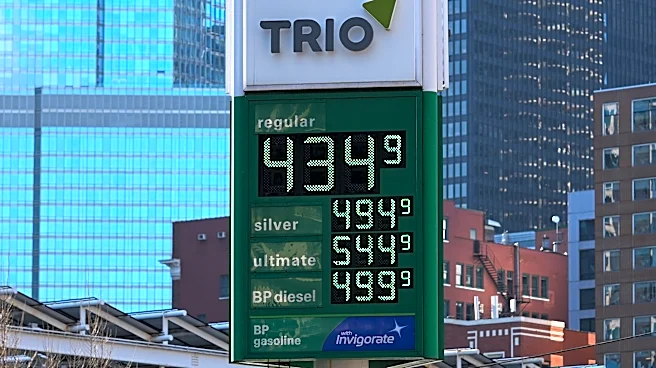
The ongoing conflict in the Middle East has led to a significant energy shock, causing U.S. inflation to rise sharply. Economists predict that the Consumer Price Index (CPI) for March will show a 0.9% increase from February, driven primarily by a 23%
spike in gas prices. This increase is expected to push the annual inflation rate to 3.4%, up from 2.4%. The rise in energy prices is anticipated to account for more than two-thirds of the projected monthly CPI increase. The conflict has disrupted the flow of critical materials, including fertilizers and aluminum, further exacerbating inflationary pressures. Despite a recent ceasefire, uncertainty remains, and inflation is expected to continue rising in the coming months.
Why It's Important?
The surge in inflation poses a significant threat to U.S. wage growth, which has outpaced inflation for nearly three years. As prices rise, Americans' pay gains are likely to be eroded, impacting consumer purchasing power. The energy price shock is expected to ripple through the economy, affecting goods and services prices over the next few months. Rising transportation costs and disrupted supply chains could lead to higher prices for groceries and other essential items. While housing-related inflation is slowing, the overall inflationary trend could have lasting impacts on the U.S. economy, affecting both consumers and businesses.
What's Next?
The energy price shock is expected to take several months to fully impact other parts of the economy. Economists anticipate that goods prices will begin to reflect these changes within three to six months. Companies may impose surcharges to cover increased transportation costs, which could appear in April's data. The ongoing conflict and its effects on critical material flows, such as fertilizers, could further drive up food prices. Stakeholders, including policymakers and businesses, will need to monitor these developments closely to mitigate potential economic disruptions.