








What's Happening?
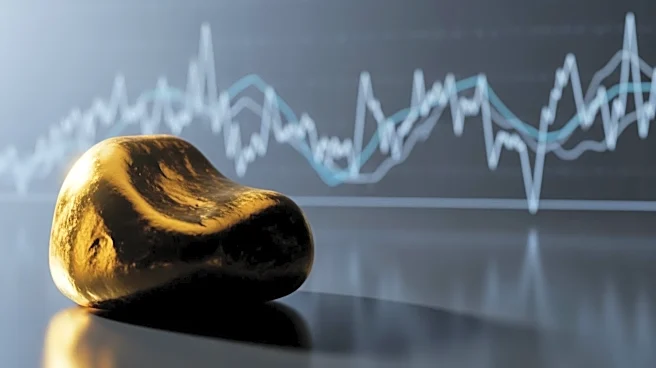
The gold market is experiencing a persistent downtrend, with prices hovering near critical long-term support levels. This trend continues despite a recent increase in U.S. jobless claims, which rose to a seasonally adjusted 229,000 for the week ending
June 6, according to the Labor Department. This figure exceeded expectations, as consensus estimates had predicted 220,000 claims. The previous week's claims were unrevised at 225,000. Despite the weaker-than-expected labor market data, the gold market has shown little reaction. Analysts note that the labor market remains relatively healthy, even with some short-term volatility. Gold prices last traded at $4,067.90 an ounce, remaining roughly unchanged on the day, with analysts closely monitoring the critical support level at $4,000 an ounce.
Why It's Important?
The increase in jobless claims could signal potential challenges in the U.S. labor market, which may have broader implications for economic stability and consumer confidence. However, the gold market's lack of reaction suggests that investors may still view the labor market as resilient. The stability of gold prices near critical support levels indicates that investors are cautious but not yet alarmed by the labor data. This situation highlights the complex interplay between economic indicators and commodity markets, where expectations and actual data can lead to varied market responses. The ongoing monitoring of jobless claims and gold prices will be crucial for stakeholders, including investors and policymakers, as they assess the health of the economy and make informed decisions.
What's Next?
Analysts and economists will continue to monitor the labor market data closely, as any significant changes could impact investor sentiment and market dynamics. The Federal Reserve and other policymakers may also consider these developments when making decisions about interest rates and economic policy. If jobless claims continue to rise, it could prompt a reassessment of economic forecasts and potentially lead to policy adjustments aimed at supporting the labor market. Meanwhile, gold investors will keep a close eye on price movements and support levels, as any breach of critical thresholds could trigger further market reactions.