
What's Happening?
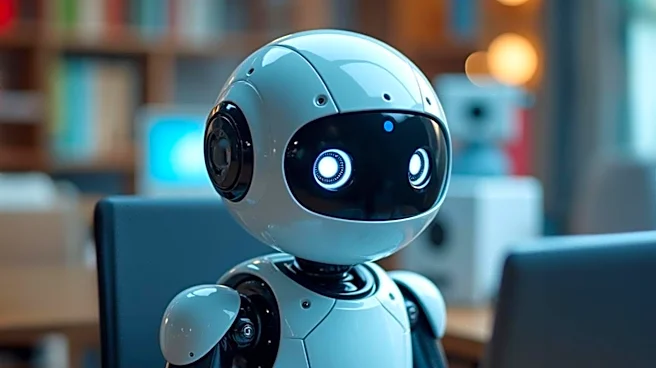
Vivi Mengjie Xiao, an AI product manager in China, has developed six AI employees using the OpenClaw platform to enhance her productivity. These AI agents are designed to handle various tasks, both professional
and personal, allowing Xiao to focus on more strategic and creative work. Despite the increased efficiency, Xiao reports feeling more exhausted as her workday has extended, with her bedtime shifting from midnight to 2 a.m. The AI agents have taken over 60% to 70% of her daily operational tasks, such as information gathering, research, and content distribution. Xiao's experience highlights a shift in work dynamics, where AI is increasingly handling execution tasks, allowing humans to concentrate on creativity and strategic thinking.
Why It's Important?
The development and use of AI employees by Xiao underscore a significant transformation in the workplace, where AI is not just a tool for automation but a partner in productivity. This shift could lead to a reevaluation of workforce needs, with companies potentially opting for fewer human employees supplemented by AI agents. The implications for industries are vast, as businesses might prioritize hiring individuals with the ability to manage and direct AI systems over traditional roles. This evolution could redefine job roles, emphasizing skills like judgment, emotional intelligence, and the ability to leverage AI for creative and strategic purposes. The trend also raises questions about work-life balance, as increased efficiency does not necessarily equate to reduced workload.
What's Next?
As AI continues to integrate into various sectors, the future of work may see more individuals operating as 'one-person studios,' using AI to achieve outputs traditionally requiring a team. Companies might need to adapt by restructuring their workforce and investing in training employees to work alongside AI. This could lead to a competitive advantage for businesses that effectively harness AI capabilities. Additionally, there may be a growing demand for policies and frameworks to address the ethical and practical implications of AI in the workplace, ensuring that the benefits of AI are maximized while mitigating potential downsides such as employee burnout.
Beyond the Headlines
The integration of AI into daily work routines raises deeper questions about the nature of work and human fulfillment. As AI takes over more routine tasks, the value of human work may increasingly lie in areas that require creativity, empathy, and complex decision-making. This shift could lead to a cultural reevaluation of what constitutes meaningful work and how individuals derive satisfaction from their professional lives. Furthermore, the reliance on AI could prompt discussions about data privacy, security, and the ethical use of AI in decision-making processes.