





What's Happening?
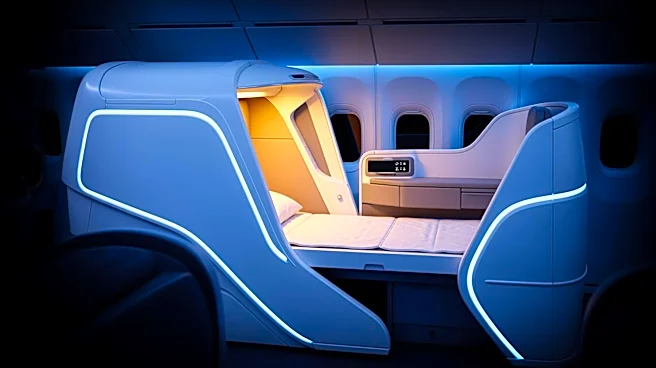
Air New Zealand is set to launch a new feature for economy passengers on its ultra-long-haul flights between Auckland and New York. Starting in late 2026, passengers will have the option to book a spot in the airline's innovative 'Skynest' sleep pods.
These pods are designed to provide a more comfortable travel experience by offering full-length, lie-flat sleeping arrangements within the aisle of the Boeing 787-9 Dreamliner. Each pod comes equipped with fresh bedding, a privacy curtain, ambient lighting, and a kit containing eye masks, skincare products, earplugs, and socks. Passengers can book a four-hour session in these pods for NZ$495, with two sessions available per flight. This initiative is part of Air New Zealand's strategy to make long-haul travel more manageable and appealing, especially given the country's remote location.
Why It's Important?
The introduction of sleep pods in economy class represents a significant shift in the airline industry, aiming to enhance passenger comfort on long-haul flights. This move could set a new standard for economy travel, potentially influencing other airlines to adopt similar innovations. By improving the travel experience, Air New Zealand hopes to attract more passengers willing to endure lengthy flights to visit the remote nation. This development is particularly relevant as airlines seek to recover from the downturn in travel demand caused by global conflicts and economic challenges. The added comfort could be a deciding factor for travelers choosing between airlines, especially as competition intensifies in the long-haul market.
What's Next?
Air New Zealand plans to make the Skynest pods available for booking from May 18, with services commencing in November. As the airline rolls out this new feature, it will be crucial to monitor passenger feedback and demand. Other airlines, such as United Airlines and Qantas, are also exploring ways to enhance economy class offerings, indicating a broader industry trend towards improving passenger comfort. The success of these initiatives could lead to further innovations and potentially reshape the economy class travel experience. Additionally, the airline's pricing strategy and the impact of external factors like fuel costs and geopolitical tensions will continue to influence its operations and profitability.