
What's Happening?
The agriculture biotechnology market is projected to grow significantly, from an estimated $92.19 billion in 2025 to $144.25 billion by 2030, according to a recent report. This growth is driven by increasing global food demands, decreasing arable land,
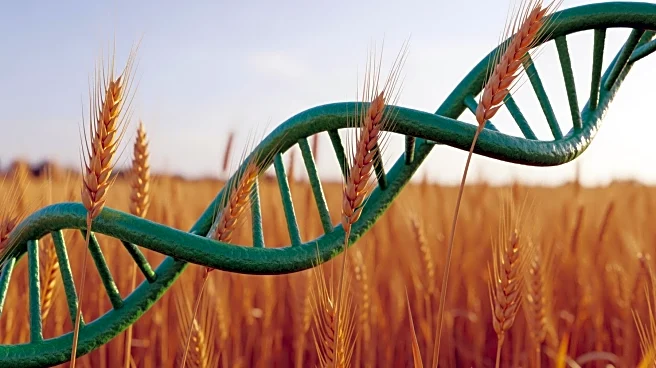
and the pursuit of sustainable farming practices. Key drivers include the adoption of genetically modified (GM) crops and microbial innovations aimed at boosting crop yields and minimizing environmental impact. The plant biotechnology sector is expected to dominate the market, with genetic engineering innovations such as CRISPR-based crops leading the way. Major players like Bayer Crop Science and Corteva Agriscience are investing heavily and benefiting from supportive regulations to expand their market presence.
Why It's Important?
The expansion of the agriculture biotechnology market is crucial for addressing global food security challenges. As the world population continues to grow, the demand for food increases, necessitating more efficient and sustainable agricultural practices. Biotechnology offers solutions to enhance crop yields, improve soil health, and increase livestock productivity while reducing environmental impact. The adoption of GM crops and biofertilizers supports better resource management and reduces reliance on chemical inputs. Additionally, the development of drought-tolerant and pest-resistant crop varieties is essential for adapting to climate change and ensuring agricultural resilience. This market growth also presents significant opportunities for companies involved in biotechnology, as they can capitalize on the increasing demand for innovative agricultural solutions.
What's Next?
The agriculture biotechnology market is expected to continue evolving with advancements in genome editing, molecular diagnostics, and microbial engineering. These innovations will broaden the application of biotechnology in plant, animal, and microbial systems, driving a shift toward high-tech, eco-friendly, and high-yield agriculture. Governments and international organizations are likely to continue supporting biotech innovations through favorable regulations, research funding, and sustainability initiatives. As the market grows, companies will need to develop effective go-to-market strategies to position themselves competitively and meet the rising demand for sustainable agricultural solutions.