



What's Happening?
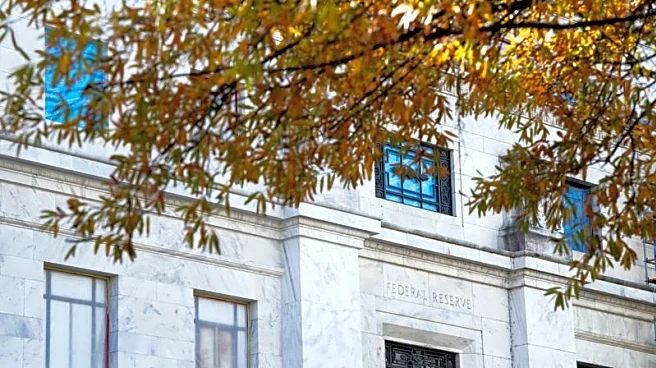
Federal Reserve Chair Jerome Powell's tenure is drawing increased attention as his term concludes in May. Appointed by President Trump in 2018 and reappointed under President Biden, Powell has navigated significant challenges, including emergency interventions during the pandemic and a historic rate hiking cycle. Criticized for initially underestimating inflation as 'transitory,' Powell later implemented aggressive rate hikes, raising the overnight lending rate to over 5%. His ability to manage a 'soft landing'—curbing inflation without harming the labor market—will be a key aspect of his legacy. The Fed's upcoming meeting minutes, one of the last under Powell, will further shape his legacy. The central bank's dual mandate of maximum employment
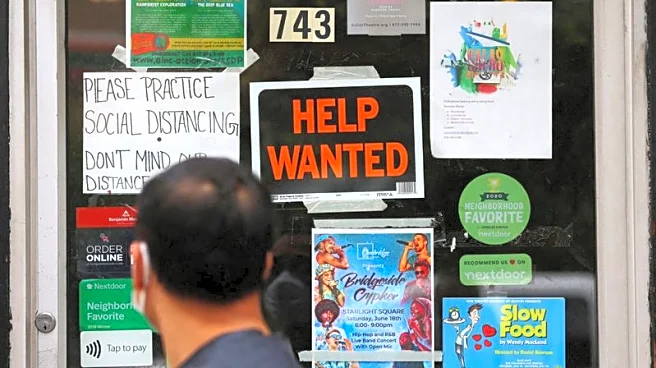
and stable prices is reportedly in better balance, with recent job reports and inflation trends aligning with the Fed's targets.
Why It's Important?
Powell's leadership has been pivotal during a tumultuous period for the U.S. economy. His decisions on interest rates and inflation management have significant implications for economic stability and growth. As the Fed approaches a leadership transition, the handling of these issues will influence market confidence and economic policy. The outcome of Powell's tenure will affect stakeholders across the financial sector, impacting everything from stock market performance to consumer confidence. The Fed's approach to interest rates, especially in light of recent economic indicators, will be closely watched by investors and policymakers alike.
What's Next?
As Powell's term ends, the focus will shift to his successor and the future direction of the Fed's policies. The central bank's next steps in managing interest rates and inflation will be critical, especially given the current economic conditions. The upcoming release of the Fed's meeting minutes and economic reports will provide further insights into the central bank's strategy. Investors and market analysts will be keenly observing these developments to gauge the Fed's future policy trajectory.