





What's Happening?
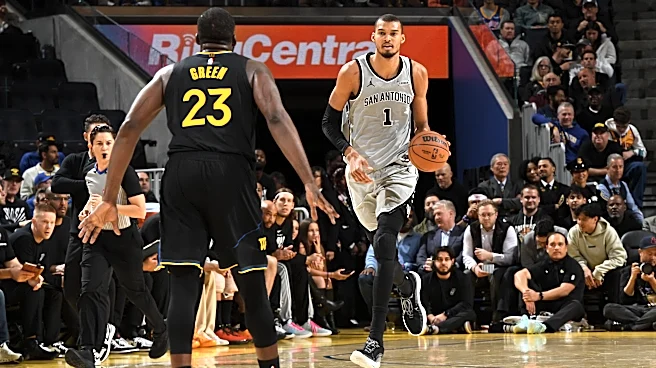
Draymond Green, a veteran player for the Golden State Warriors, has publicly expressed skepticism about the recent media-driven narrative favoring San Antonio Spurs center Victor Wembanyama in the NBA MVP race. Green defended Oklahoma City Thunder guard
Shai Gilgeous-Alexander, arguing that the MVP award should remain with him. This debate was reignited after Wembanyama made a public appeal for the MVP title, which coincided with his rise to the top of the league's official MVP ladder. Green attributes this shift to media influence rather than a genuine change in the season's dynamics. He emphasized that Gilgeous-Alexander has consistently performed at a high level, leading the Thunder to the top of the Western Conference standings with his exceptional play.
Why It's Important?
The discussion around the NBA MVP race highlights the tension between media narratives and player performance. Draymond Green's comments underscore the influence of media in shaping public perception and award outcomes. This situation reflects broader issues in sports where media narratives can overshadow on-court achievements. For Gilgeous-Alexander, maintaining his position as a top MVP contender is crucial for his career and the Thunder's success. The outcome of this debate could impact how future MVP races are perceived and judged, potentially affecting the criteria for what constitutes MVP-worthy performance.
What's Next?
As the NBA season progresses, the MVP race will continue to be a focal point of discussion. Both Gilgeous-Alexander and Wembanyama will need to sustain their high levels of performance to solidify their cases. The media's role in influencing MVP narratives may prompt further scrutiny and debate among players, analysts, and fans. The outcome of this race could lead to discussions about the criteria for MVP selection and the balance between media influence and player performance.