




What's Happening?
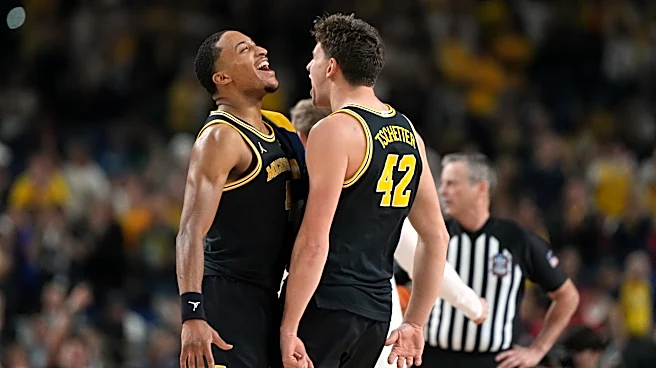
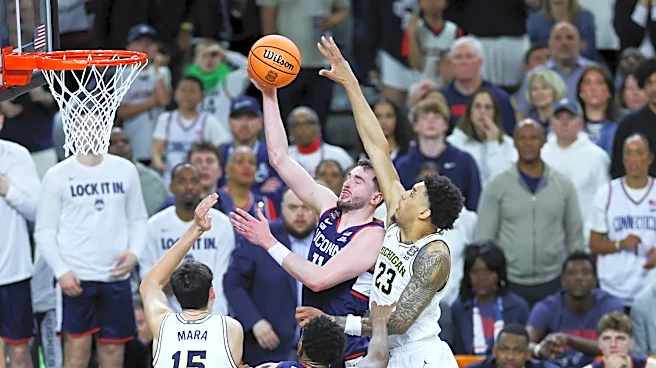
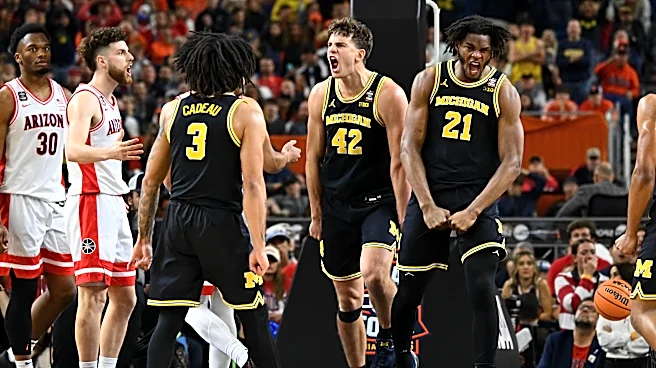
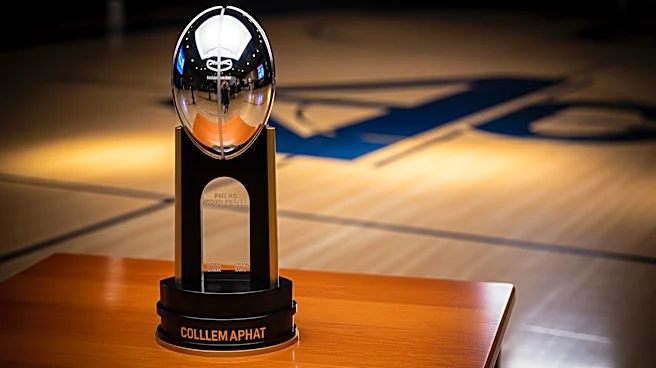
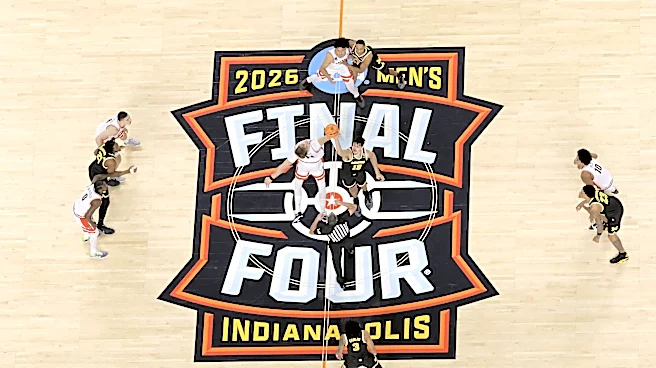
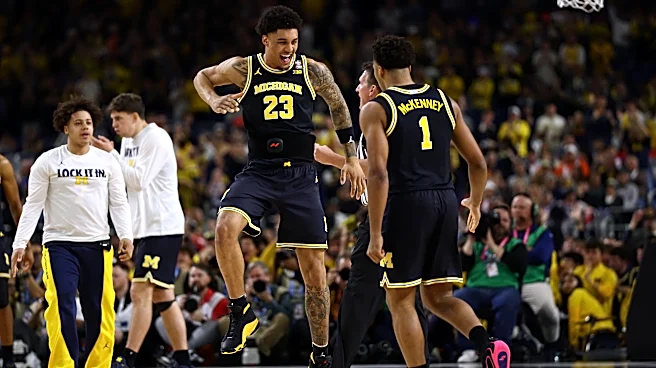
The Michigan Wolverines clinched their second national title by defeating the University of Connecticut (UConn) 69-63 in the NCAA championship game. The victory was led by coach Dusty May's starting lineup, which included five transfer players. Despite
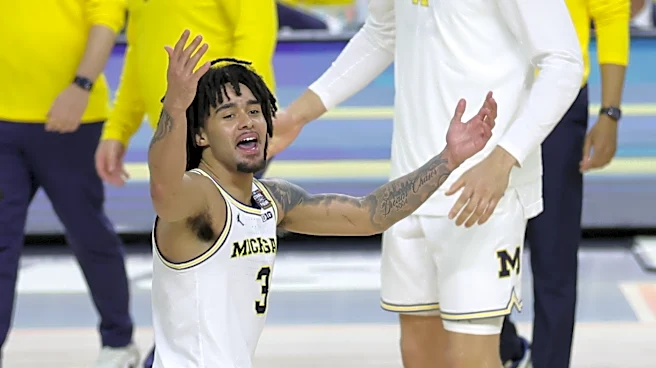
a challenging game where Michigan struggled with shooting, making only two three-pointers, they managed to secure the win through strong defensive play. Elliot Cadeau was a standout performer, scoring 19 points, while Trey McKenney's late three-pointer was pivotal in maintaining Michigan's lead. UConn, known for its strong performance, was held to a 30.9% shooting percentage, marking the fourth consecutive game where Michigan's defense limited their opponents' field goal percentage.
Why It's Important?
This victory is significant for Michigan as it marks their first national title since 1989, highlighting the success of their strategy in utilizing the transfer portal to build a competitive team. The win underscores the effectiveness of integrating new players into a cohesive unit capable of overcoming traditional powerhouses like UConn. For UConn, the loss ends their bid to become the first team since UCLA's dynasty to win three titles in four years, showcasing the competitive nature of college basketball and the challenges of maintaining dominance. The outcome of this game reflects broader trends in college sports, where player mobility and strategic recruitment are increasingly shaping team dynamics and success.
What's Next?
Following their championship win, Michigan will likely focus on maintaining their competitive edge by continuing to leverage the transfer portal and developing their current roster. UConn, on the other hand, will aim to regroup and address the challenges faced during the game, particularly in shooting and managing foul trouble. Both teams will prepare for the next season, with Michigan looking to defend their title and UConn seeking to reclaim their position as a dominant force in college basketball. The strategies employed by both teams could influence recruitment and training approaches across the NCAA.