



What's Happening?
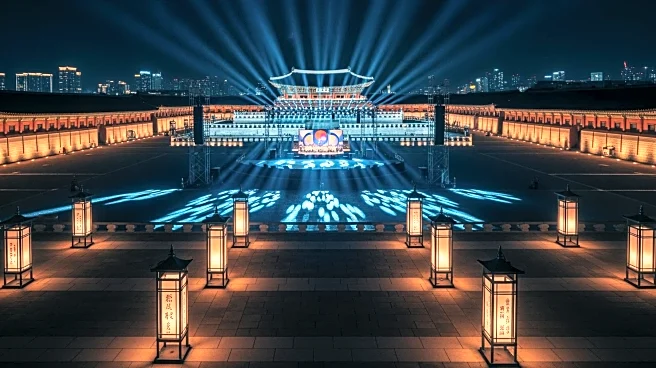
BTS, the globally renowned K-pop group, has made a significant return to the stage with a free public concert in Seoul, marking their first group performance in nearly four years. The event, held at Gwanghwamun Square, attracted a massive turnout, with 22,000
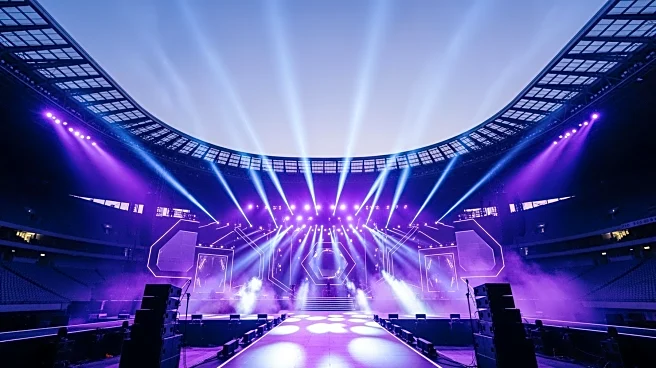
fans receiving 'Golden Tickets' and an estimated 260,000 attendees overall. This concert is part of the promotional activities for their new album 'Arirang,' which explores themes of personal identity and belonging. The album has already seen over 4 million pre-orders, with expectations of reaching 6 million in sales. The concert was directed by Hamish Hamilton, known for his work on major events like the Super Bowl halftime show, and featured a stage design that honored both modern and historical elements of the venue.
Why It's Important?
The comeback of BTS is poised to have a substantial impact on the K-pop industry, potentially generating around $1.93 billion, a figure comparable to major global tours like Taylor Swift's 'Eras Tour.' This event not only highlights BTS's influence but also serves as a catalyst for the growth of the K-pop industry. The concert underscores the deep connection between BTS and their fanbase, known as ARMY, and showcases the group's ability to blend cultural heritage with modern entertainment. The event also emphasizes the role of K-pop in enhancing South Korea's cultural influence globally, with the concert being seen as a demonstration of the country's cultural excellence.
What's Next?
Following the concert, BTS is set to embark on a world tour covering 34 regions from April 2026 to March 2027. This tour is expected to further solidify their global presence and influence. Additionally, a documentary on their reunion and the concert will be available on Netflix, providing fans worldwide with an opportunity to experience the event. The success of this comeback is likely to inspire other K-pop groups and artists, potentially leading to more international collaborations and performances. The South Korean government and cultural institutions may continue to leverage K-pop's popularity to boost tourism and cultural diplomacy.
Beyond the Headlines
BTS's comeback concert also highlights the evolving nature of K-pop, with increasing international collaborations and a shift towards more global music markets. The use of traditional Korean elements, such as hanbok-inspired fashion, in the concert reflects a growing trend of cultural fusion in K-pop. This event may also influence the strategic direction of other K-pop groups, encouraging them to explore diverse musical styles and languages. Furthermore, the concert's success could lead to increased investment in the K-pop industry, fostering new talent and expanding its global reach.