
What's Happening?
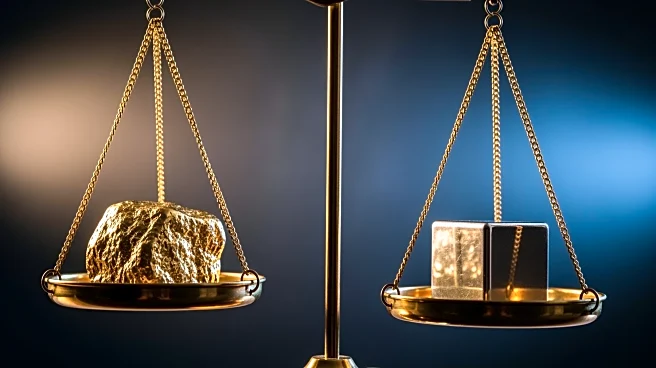
Gold and silver prices experienced a significant drop following the announcement of Kevin Warsh's nomination as the next Federal Reserve chair by the Trump administration. Gold prices fell by 6%, settling just above $5,000 per ounce, while silver saw a 15% decline, bouncing back to $100 per ounce. This downturn follows a period of record highs for both metals, with gold peaking at nearly $5,600 per ounce and silver above $121 per ounce earlier in the week. The price drop was exacerbated by a stronger US dollar and profit-taking by investors. The metals market has been volatile, with traders' risk models strained by soaring prices and volatility.
Why It's Important?
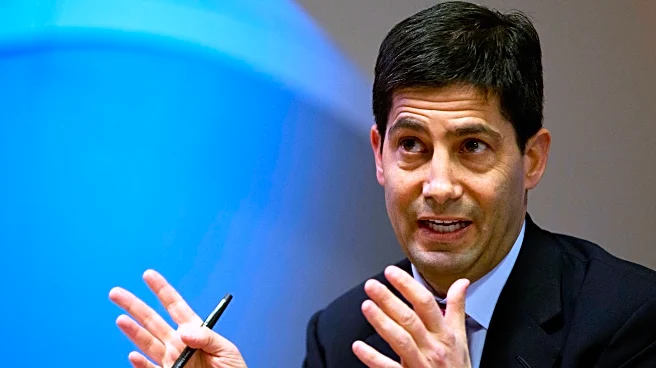
The nomination of Kevin Warsh, known for his hawkish stance, has implications for future Federal Reserve
policies, particularly concerning interest rates. Traders had hoped for rate cuts, but Warsh's appointment suggests a more conservative approach, impacting market expectations. The price correction in precious metals highlights the volatility and speculative nature of these markets, which can affect investors' portfolios and broader economic sentiment. Despite the recent downturn, gold and silver have seen substantial gains this year, indicating ongoing interest and investment in these assets as hedges against economic uncertainty.
What's Next?
Market participants are likely to closely monitor the Federal Reserve's actions following Warsh's nomination, particularly regarding interest rate decisions. The metals market may continue to experience volatility as traders adjust their strategies based on evolving economic indicators and policy announcements. Analysts suggest that while the recent price drop was triggered by Warsh's nomination, the Federal Reserve may still face pressure to cut interest rates, which could influence future price movements in gold and silver.
Beyond the Headlines
The recent price movements in gold and silver underscore the complex interplay between market speculation, economic policy, and investor sentiment. The metals' volatility serves as a reminder of the risks associated with commodity investments, particularly in times of political and economic uncertainty. The broader implications of Warsh's nomination may extend beyond the metals market, influencing equity markets and economic forecasts as stakeholders reassess the potential direction of U.S. monetary policy.