






What's Happening?
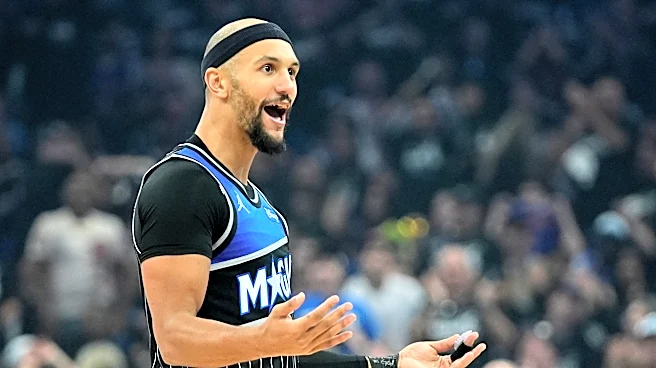
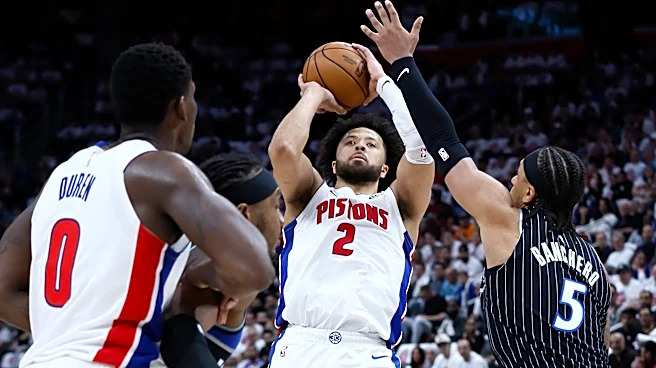
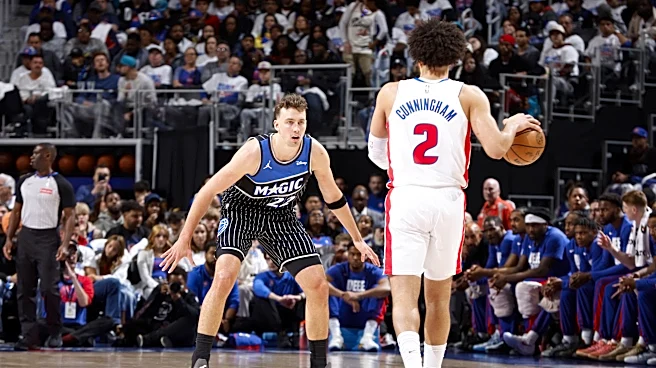
In a thrilling NBA playoff game, the Orlando Magic managed to overcome a significant fourth-quarter deficit to defeat the Detroit Pistons 113-105. Paolo Banchero and Desmond Bane were pivotal in the victory, each scoring 25 points. Banchero also contributed
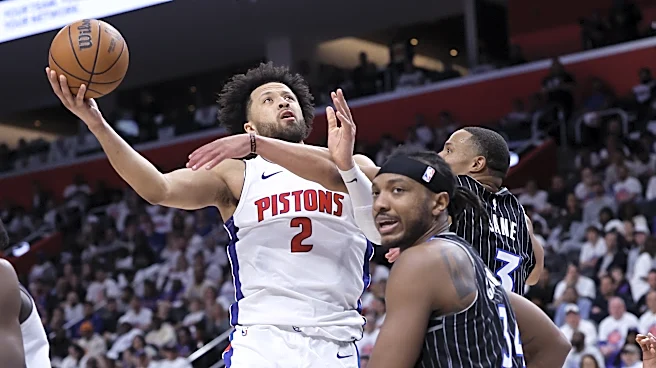
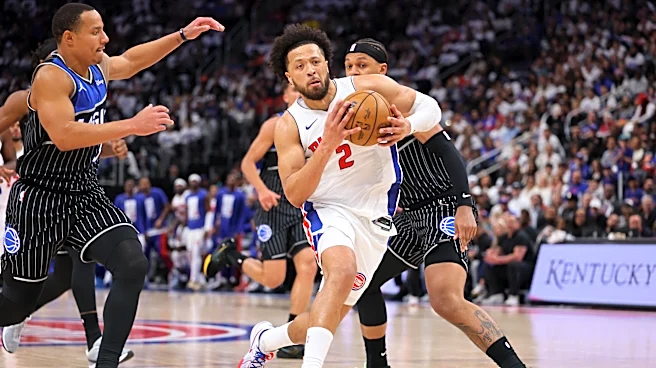
with 12 rebounds and nine assists. Despite trailing by 17 points in the fourth quarter, the Pistons rallied to take the lead, driven by Cade Cunningham's 27 points and Tobias Harris's 23 points. However, the Magic regained control in the final minutes, securing their lead in the Eastern Conference first-round series. The Magic's victory marks the 13th instance since 1984 where a No. 8 seed has taken a 2-1 lead over a No. 1 seed in the playoffs.
Why It's Important?
This victory is significant for the Orlando Magic as they aim to become one of the few No. 8 seeds to upset a No. 1 seed in NBA playoff history. Achieving this would place them alongside teams like Miami, Philadelphia, Memphis, Golden State, and New York, who have previously accomplished this feat. The Magic's ability to rally and win despite a late-game deficit demonstrates their resilience and potential to advance further in the playoffs. For the Pistons, the loss highlights the need for strategic adjustments to reclaim home-court advantage in the upcoming games.
What's Next?
The series continues with Game 4 scheduled for Monday night in Orlando. The Magic will aim to extend their lead, while the Pistons will focus on regaining momentum and home-court advantage. Both teams are expected to make tactical adjustments to address the physicality and fouling issues observed in the previous games. The outcome of Game 4 will be crucial in determining the trajectory of the series.
Beyond the Headlines
The intense physicality of the series has led to multiple fouls and technicals, reflecting the competitive nature of playoff basketball. The interactions between players, such as those involving Detroit's Isaiah Stewart, highlight the emotional and psychological aspects of high-stakes games. These dynamics can influence team morale and performance, adding another layer to the strategic planning required by coaches.