





What's Happening?
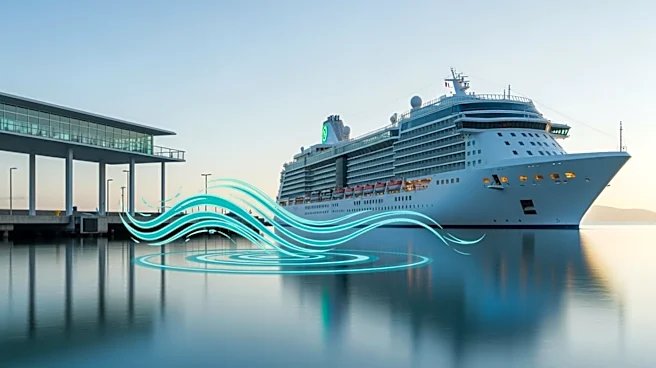
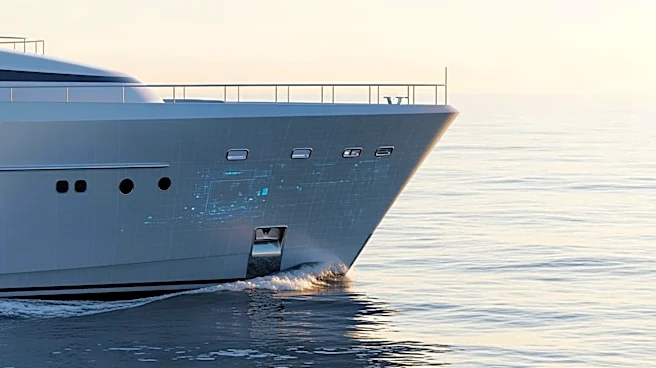
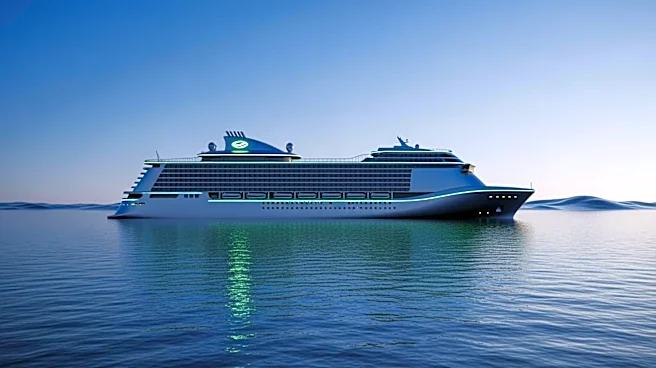
German shipbuilder Meyer Werft has introduced a groundbreaking concept for what could become the world's first fully battery-electric cruise ship exceeding 80,000 gross tons. This innovative design, named 'Vision,' was revealed at the Seatrade Cruise
Global event in Miami. The ship is designed to accommodate 1,856 passengers and aims to achieve up to a 95% reduction in greenhouse gas emissions compared to traditional cruise ships. The concept relies on existing battery technology, with Norway-based Corvus Energy selected to supply the battery system. Meyer Werft emphasizes that this is not a distant ambition but a near-term possibility, with potential delivery as early as 2031 if ordered within the year. The ship targets short- to medium-range cruise itineraries, with many European routes achievable on battery power alone. For longer voyages, the design can be adapted to a hybrid configuration with auxiliary generators.
Why It's Important?
The introduction of the 'Vision' concept marks a significant step forward in the maritime industry's efforts to decarbonize. By leveraging battery-electric propulsion, the cruise industry can drastically reduce its environmental footprint, aligning with global sustainability goals. This development could set a precedent for future cruise ship designs, encouraging other shipbuilders to adopt similar technologies. The reduction in greenhouse gas emissions is particularly crucial as the industry faces increasing pressure to address its environmental impact. Additionally, the concept's focus on passenger comfort, with reduced noise and vibration levels, could enhance the overall cruise experience, potentially attracting more environmentally conscious travelers.
What's Next?
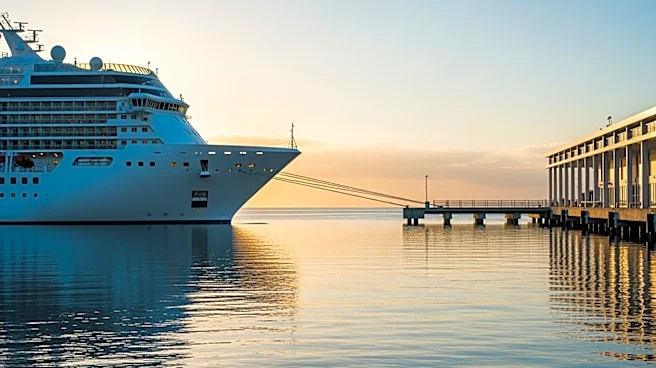
As the 'Vision' concept progresses, the next steps involve aligning the ship's design with the necessary port-side charging infrastructure and evolving regulatory frameworks. Over 100 European ports are expected to offer the required charging facilities by the end of the decade, which will be crucial for the ship's operational feasibility. The maritime industry will need to collaborate with port authorities and regulatory bodies to ensure the infrastructure and policies support the deployment of such advanced vessels. The success of this concept could accelerate the adoption of battery-electric propulsion in larger passenger ships, beyond ferries and short-sea vessels.
Beyond the Headlines
The 'Vision' concept not only represents a technological advancement but also a shift in cruise ship architecture. The absence of conventional exhaust systems allows for more innovative design possibilities, such as open deck spaces with uninterrupted views and enclosed, weather-protected areas like an indoor aqua park. This architectural rethink could redefine passenger expectations and set new standards for cruise ship design. Furthermore, the move towards full electric propulsion highlights the industry's commitment to sustainability and could influence broader cultural and ethical considerations regarding travel and environmental responsibility.