







What's Happening?
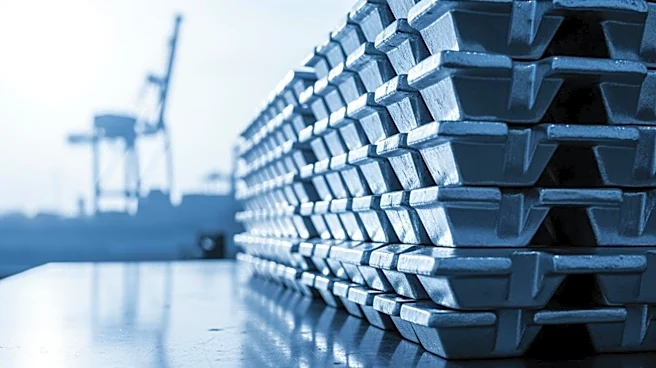
The share of Russian-origin aluminum in London Metal Exchange (LME) warehouses has rebounded to 93% in May, up from 72% in April. This increase is attributed to traders withdrawing Indian metal, leading to a decrease in available non-Russian aluminum stocks.
Total available aluminum inventories on the LME fell by 23% in May, reaching the lowest levels since May 2025. The shift in stock composition is influenced by production and logistical constraints in the Middle East, which have tightened global supply. Despite Western sanctions, Russian aluminum produced before April 2024 remains tradable, contributing to its dominance in LME stocks.
Why It's Important?
The dominance of Russian aluminum in LME stocks has significant implications for global trade and supply chains. The reliance on Russian metal, despite sanctions, underscores the challenges faced by the aluminum industry in diversifying supply sources. This situation highlights the geopolitical complexities and economic dependencies that can influence commodity markets. The constraints in the Middle East further exacerbate supply issues, potentially impacting pricing and availability for industries reliant on aluminum. Stakeholders in the manufacturing and construction sectors may face increased costs and supply chain disruptions as a result.
What's Next?
As global supply constraints persist, the aluminum market may experience continued volatility. Traders and industry leaders will need to navigate the geopolitical landscape and explore alternative supply sources to mitigate risks. The situation may prompt discussions on policy measures to enhance supply chain resilience and reduce dependency on specific regions. Additionally, the market will be closely monitoring the impact of ongoing sanctions and geopolitical tensions on commodity trade and pricing.