






What's Happening?
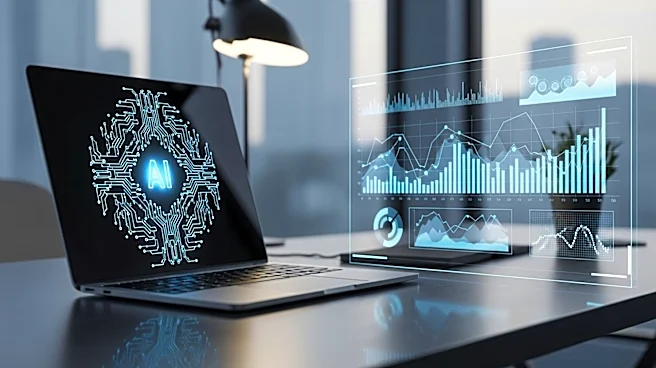
Major corporations like Meta and JPMorgan are increasingly tracking employee use of artificial intelligence (AI) as part of their operational strategies. These companies have developed internal dashboards to monitor how employees integrate AI into their work,
capturing data on tasks such as writing, coding, and decision-making. This shift is driven by the need to ensure that AI investments are effectively utilized and to train company-specific AI systems. However, this practice has raised concerns among employees about privacy and the potential for misuse of data. Some workers have reportedly manipulated AI usage metrics to improve their rankings, leading to internal tensions.
Why It's Important?
The tracking of AI usage in the workplace reflects a broader trend of integrating technology into daily operations. While this can enhance productivity and innovation, it also raises significant privacy and ethical concerns. Employees may feel pressured to use AI tools excessively, potentially leading to stress and job insecurity. The practice of monitoring AI usage could influence decisions about promotions and job performance, impacting workplace dynamics. As companies continue to adopt AI, it is crucial to establish clear guidelines and privacy protections to balance technological advancement with employee rights and well-being.
Beyond the Headlines
The implementation of AI tracking systems highlights the evolving nature of workplace surveillance and the ethical considerations it entails. As AI becomes a standard tool in various industries, companies must navigate the fine line between leveraging technology for efficiency and respecting employee autonomy. The potential for 'tokenmaxxing,' where employees artificially inflate AI usage, underscores the need for transparent and fair evaluation metrics. This development also prompts discussions about the future of work and the role of AI in shaping organizational culture and employee relations.