




What's Happening?
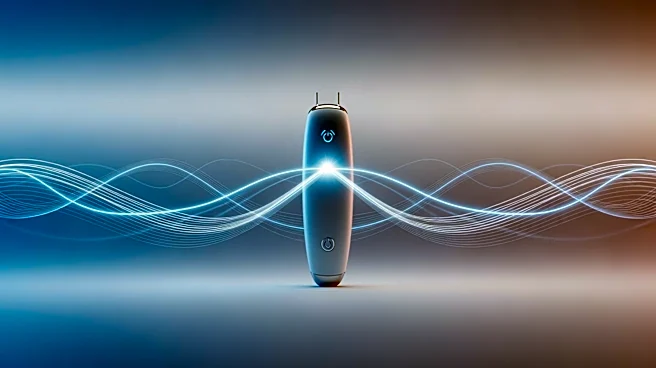
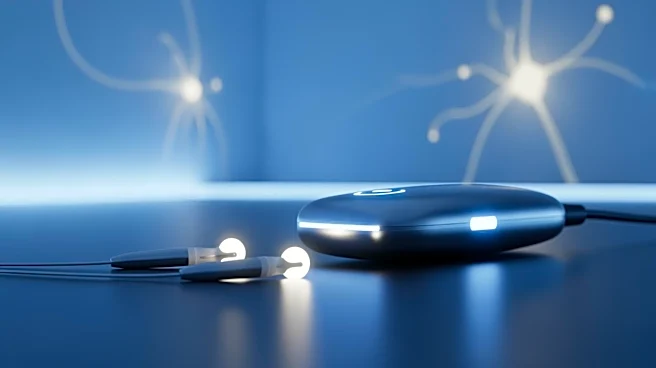
Nexalin Technology, Inc. has published a study in BMC Psychiatry demonstrating significant reductions in self-injury behaviors and depressive symptoms among female adolescents with non-suicidal self-injury (NSSI) using their Deep Intracranial Frequency
Stimulation (DIFS) technology. The study involved six patients who received 21 days of 77.5 Hz, 15 mA stimulation. The results showed improvements in depressive symptoms and self-injury behaviors, with changes in brain network activity and connectivity. The study provides neurophysiological evidence supporting the efficacy of Nexalin's non-invasive, high-power DIFS technology.
Why It's Important?
This study highlights the potential of Nexalin's DIFS technology as a non-invasive, drug-free treatment for mental health disorders, particularly in populations that are difficult to treat. The findings suggest that the technology can effectively reduce self-injury behaviors and depressive symptoms, offering a promising alternative to traditional treatments. The study also provides evidence of changes in brain network activity, supporting the underlying mechanism of the technology. As mental health disorders continue to be a significant public health concern, innovative treatments like Nexalin's DIFS technology could play a crucial role in improving patient outcomes.
What's Next?
Nexalin plans to conduct further research to validate these findings in larger, randomized controlled trials. The company aims to expand the application of its DIFS technology across multiple mental health indications, including depression, PTSD, and ADHD. Nexalin is also working on increasing patient access to its technology through its digital health ecosystem, NeuroCare. As the company continues to publish peer-reviewed studies, it seeks to strengthen the scientific and commercial case for its technology, potentially leading to broader adoption in the mental health field.