

What's Happening?
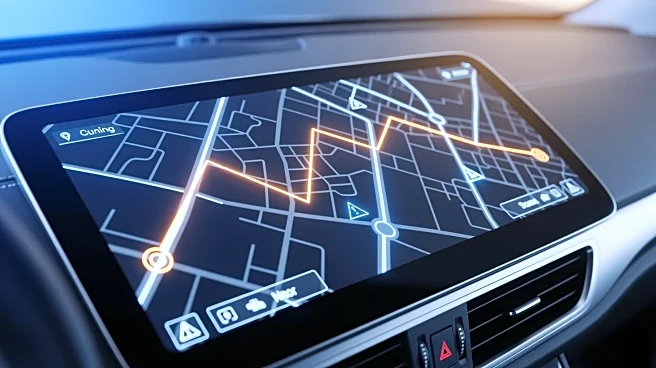
Tesla's Full Self-Driving (FSD) system, despite significant advancements, continues to face criticism for its inaccuracies. The FSD Supervised v12.6.4, currently running on older Tesla models, has shown improvements in navigating complex driving scenarios but still struggles with certain tasks like parking and lane selection. The latest version, FSD v14, available on newer models with Hardware V4, offers enhanced capabilities, including better handling of stop signs, traffic lights, and complex maneuvers. Tesla's data system, one of the largest in the world, continuously trains the FSD using data from all Tesla vehicles. However, the system still requires supervision, and its reliability is questioned, especially in heavy traffic or complex driving conditions.
Why It's Important?
The development and deployment of Tesla's FSD system are crucial for the future of autonomous driving technology. As Tesla pushes towards a driverless future, the system's accuracy and reliability are paramount for safety and consumer trust. The ongoing improvements in FSD highlight the potential for reducing human error in driving, which could significantly decrease traffic accidents. However, the current limitations and need for supervision indicate that fully autonomous vehicles are not yet ready for widespread use. This impacts Tesla's business strategy and the broader automotive industry's shift towards autonomous vehicles.
What's Next?
Tesla plans to continue refining its FSD system, with future updates expected to further reduce the need for driver intervention. The company is also testing 'Robotaxi' services in Austin, Texas, using FSD v14, which could pave the way for commercial autonomous ride-sharing services. As Tesla gathers more data and improves its AI models, the company aims to achieve a level of autonomy that surpasses human driving capabilities. The success of these initiatives will depend on regulatory approvals and public acceptance of autonomous driving technology.
Beyond the Headlines
The ethical and legal implications of autonomous driving technology are significant. As Tesla and other companies advance their AI systems, questions about liability in the event of accidents and the ethical considerations of AI decision-making in critical situations become more pressing. Additionally, the environmental impact of data centers used to train AI systems, which consume large amounts of electricity, is a growing concern. These factors will play a crucial role in shaping the future of autonomous vehicles and their integration into society.