



What's Happening?
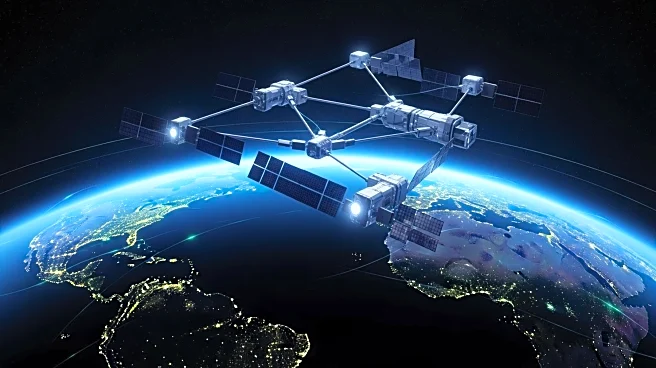
SpaceX successfully launched two batches of Starlink satellites on March 13 and 14, 2026, from two different coasts in the United States. The first launch took place at Vandenberg Space Force Base in California, where a Falcon 9 rocket deployed 25 satellites into
low Earth orbit. The following day, another Falcon 9 rocket launched 29 satellites from Cape Canaveral Space Force Station in Florida. These launches are part of SpaceX's ongoing efforts to expand its Starlink constellation, which aims to provide global internet coverage. Both missions' first stage boosters returned to Earth, landing on ocean-based droneships. The total number of active Starlink satellites now stands at 9,985.
Why It's Important?
The expansion of the Starlink satellite network is significant as it enhances global internet connectivity, particularly in remote and underserved areas. This development could have substantial implications for global communication, providing high-speed internet access to regions lacking reliable infrastructure. For the U.S., this expansion supports technological advancement and economic growth by enabling better connectivity for businesses and individuals. Additionally, the successful launches and landings demonstrate SpaceX's growing proficiency in reusable rocket technology, which could lower costs and increase the frequency of space missions.
What's Next?
SpaceX is likely to continue its aggressive launch schedule to further expand the Starlink constellation. As the network grows, regulatory and competitive challenges may arise, particularly concerning space traffic management and spectrum allocation. The company may also face increased scrutiny from governments and competitors as it seeks to dominate the satellite internet market. Future launches will likely focus on increasing the network's capacity and coverage, potentially leading to new service offerings and partnerships.