






What's Happening?
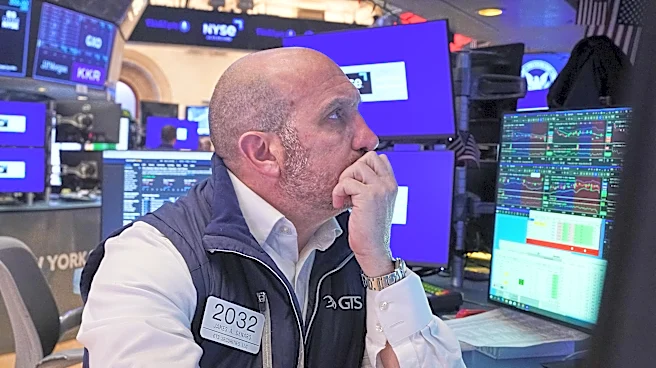
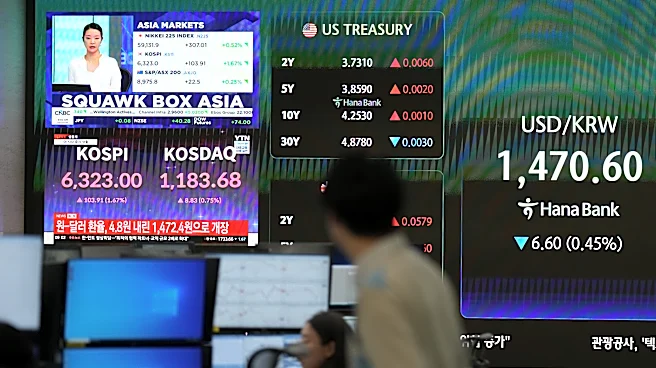
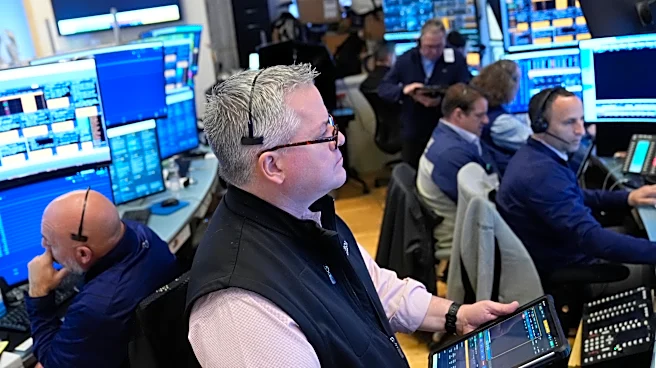
The U.S. stock market experienced fluctuations on Tuesday as uncertainty loomed over the ceasefire in the conflict with Iran, which was set to expire. The Standard & Poor’s 500 index fell by 0.6% after an initial rise, influenced by U.S. Vice President
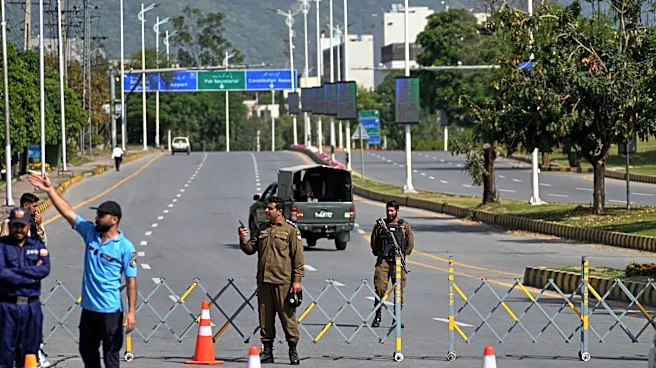
JD Vance canceling a trip to Pakistan where he was expected to negotiate an extension of the ceasefire with Iran. The Dow Jones Industrial Average and the Nasdaq composite also saw declines of 0.6%. President Trump later announced an extension of the ceasefire to allow Iran time to propose a resolution to the conflict. Oil prices also saw volatility, with Brent crude rising to $98.48 per barrel, a 3.1% increase. Despite these fluctuations, the U.S. stock market remains near its recent record high, reflecting optimism that a worst-case economic scenario can be avoided.
Why It's Important?
The developments in the U.S.-Iran ceasefire talks have significant implications for global financial markets and the economy. The Strait of Hormuz, a critical passage for oil tankers, remains a focal point of tension, with potential disruptions affecting global oil supply and prices. The extension of the ceasefire by President Trump provides temporary relief, but the lack of a long-term resolution keeps markets on edge. The situation impacts investor confidence and could influence future economic policies and decisions by major stakeholders, including businesses and governments. The ongoing uncertainty underscores the interconnectedness of geopolitical events and economic stability.
What's Next?
The extension of the ceasefire suggests that further negotiations between the U.S. and Iran are likely. Stakeholders will be closely monitoring any developments or proposals from Iran that could lead to a more permanent resolution. The financial markets will continue to react to news related to the conflict, with potential impacts on oil prices and stock market performance. Businesses and investors may adopt cautious strategies until more clarity is achieved. The situation also poses challenges for policymakers who must balance diplomatic efforts with economic considerations.