








What's Happening?
The rapid expansion of data centers driven by the increasing use of artificial intelligence is significantly impacting energy bills across the United States. In Georgia, residents like Carolyn Kayne are experiencing nearly doubled electricity costs, forcing
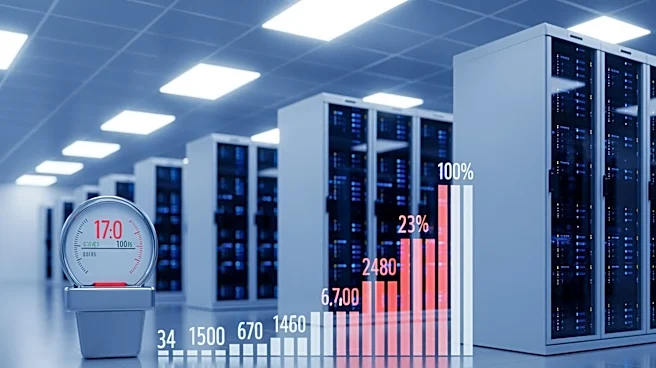
them to take drastic measures such as turning off heat and water to manage expenses. Georgia Power, the state's largest energy provider, has implemented six rate hikes over the past three years, coinciding with the opening of the Vogtle nuclear power plant and a surge in data center construction. These centers, attracted by discounted power rates, are contributing to higher utility bills in at least 13 states, with some areas seeing increases as high as 267% over five years. Despite a recent rate freeze and efforts to use revenue from large customers to offset costs, residents continue to feel the financial strain.
Why It's Important?
The rise in energy costs due to data center expansion has significant implications for both consumers and the broader economy. As data centers proliferate to support AI technologies, they place additional demand on the power grid, leading to increased costs for nearby residents. This situation highlights the need for strategic planning and regulation to balance technological growth with consumer protection. The financial burden on households could lead to broader economic challenges, as higher utility bills reduce disposable income and potentially increase the cost of living. The situation in Georgia serves as a cautionary tale for other states experiencing similar trends, emphasizing the importance of sustainable energy policies and infrastructure planning.
What's Next?
In response to the growing concerns, some states are considering legislative measures to manage the impact of data centers on energy costs. For instance, Maine's Governor Janet Mills recently vetoed a bill that would have banned new data center construction, citing the need for careful examination of their potential impacts. As the demand for AI and data processing continues to rise, states may need to explore innovative solutions, such as investing in renewable energy sources or implementing stricter regulations on data center operations. Stakeholders, including energy providers, policymakers, and consumer advocacy groups, will likely engage in ongoing discussions to address these challenges and develop strategies to mitigate the financial impact on residents.