



What's Happening?
Artificial intelligence is significantly impacting the crop micronutrients industry, with major technology and agriculture companies investing over $3.15 billion in recent years. This surge in investment is driven by the need to address declining soil
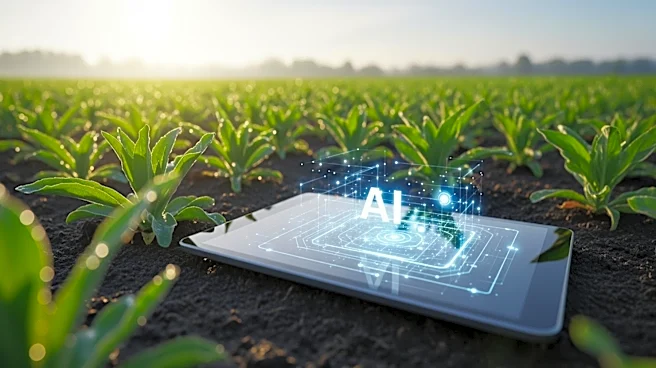
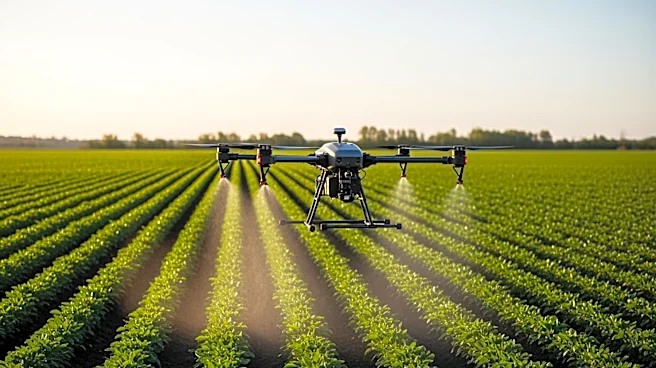
health and the increasing demand for precision nutrient management. Companies like Ecorobotix and Microsoft are leading the charge, with Ecorobotix raising $150 million in 2025 and Microsoft committing $3 billion to AI infrastructure development, including agricultural applications. AI technologies are revolutionizing micronutrient formulation, application, and monitoring, with innovations such as AI-powered precision sprayers and Variable Rate Application mapping using satellite imagery. These advancements enable targeted micronutrient delivery, reducing waste and improving efficiency.
Why It's Important?
The integration of AI in agriculture is crucial as it addresses the challenges of declining soil health and the need for sustainable farming practices. By optimizing nutrient management, AI technologies can enhance crop yields and reduce environmental impact, benefiting both farmers and the broader agricultural industry. The significant investment in AI-driven solutions reflects a growing recognition of their potential to transform agriculture, offering scalable, data-driven approaches that improve nutrient-use efficiency and reduce costs. This trend positions established technology companies and innovative startups for substantial growth, as they cater to the increasing demand for high-value crops and sustainable farming solutions.
What's Next?
As AI technologies continue to evolve, further advancements in precision agriculture are expected. Companies may expand their AI capabilities, exploring new applications and partnerships to enhance nutrient management and crop monitoring. The ongoing investment in AI infrastructure suggests a commitment to developing more sophisticated tools that can address the complex challenges of modern agriculture. Stakeholders, including farmers, technology providers, and policymakers, will likely focus on integrating these innovations into existing agricultural practices, promoting sustainable farming and ensuring food security.