


What's Happening?
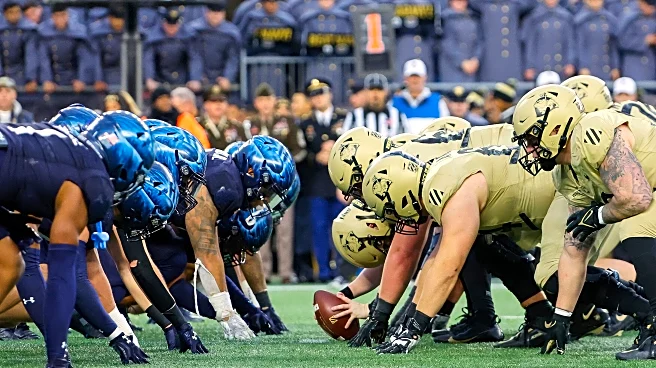
President Trump has signed an executive order to ensure that the annual Army-Navy football game remains in an exclusive viewing window, free from competition with other football games. This decision comes amid concerns that the potential expansion of
the College Football Playoff could encroach on the traditional timing of the Army-Navy game. The executive order aims to preserve the game as a unique event, traditionally held in December, by preventing other football games from being scheduled during the same time. President Trump emphasized the importance of maintaining this tradition, stating that no other football games should occur during this 'very special time of the year.' However, the enforceability of this executive order is uncertain, and it may face legal challenges.
Why It's Important?
The executive order highlights the cultural and historical significance of the Army-Navy game, which is a longstanding tradition between the two major U.S. military academies. By protecting its exclusive viewing window, the order seeks to preserve the game's unique status and ensure it remains a focal point for viewers. This move could impact the scheduling of other college football games, particularly if the College Football Playoff expands. The decision underscores the broader debate about balancing tradition with the evolving landscape of college sports, where commercial interests and viewer preferences often drive scheduling decisions. The order may also set a precedent for how other traditional sporting events are protected or prioritized in the future.
What's Next?
The executive order may face legal challenges, as its enforceability is not guaranteed. If contested, it could lead to a legal battle over the government's role in regulating sports scheduling. Stakeholders, including college football organizations and broadcasters, may need to navigate the implications of this order on their programming and scheduling strategies. Additionally, the order could prompt discussions about the role of executive power in cultural and sporting events, potentially influencing future decisions by other administrations. The response from the public and sports community will be crucial in determining the order's long-term impact.