







What's Happening?
Across the U.S., data centers are rapidly expanding, often appearing as large, windowless buildings on the outskirts of towns and farmland. These facilities, crucial for supporting the growing demand for data processing and storage, have sparked debates
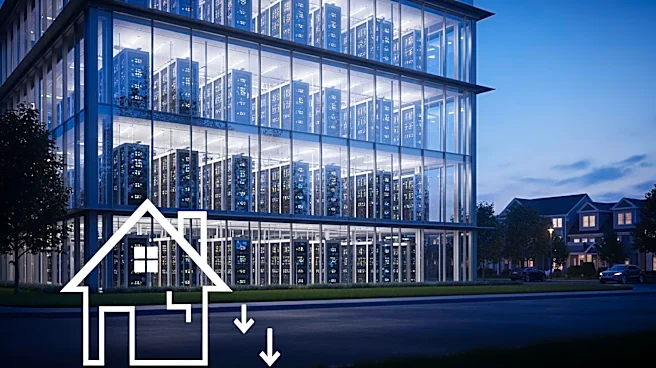
about their impact on local communities, particularly concerning home values. A recent analysis by George Mason University’s Center for Regional Analysis focused on Northern Virginia, a major hub for data centers, and found that homes closer to these facilities tend to sell for higher prices on average. This challenges the common belief that proximity to data centers depresses property values. However, the study's authors caution against overinterpreting these findings, noting that data centers typically locate where existing infrastructure is already valued by homebuyers. Despite the potential for increased property values, residents have expressed concerns about the broader impacts of data centers, including noise, energy demand, and infrastructure expansion.
Why It's Important?
The expansion of data centers is significant due to their role in supporting the digital economy and the increasing demand for data processing, particularly with the rise of artificial intelligence. While the study suggests that data centers may not negatively impact home values, the broader implications for communities are complex. Data centers require substantial infrastructure, which can lead to increased noise, energy consumption, and changes in land use. These factors can affect the quality of life for nearby residents and raise questions about the sustainability of such developments. Additionally, the economic benefits, such as increased tax revenue, must be weighed against potential disruptions to local communities. As data centers continue to proliferate, understanding their full impact on both property values and community dynamics is crucial for policymakers and stakeholders.
What's Next?
As data centers continue to expand beyond traditional hubs like Northern Virginia, communities across the U.S. are likely to face similar debates about their impact. In some areas, residents have already begun to push back against new developments, citing concerns about rezoning and the lack of public consultation. Policymakers will need to balance the economic benefits of data centers with the potential challenges they pose to local communities. This may involve implementing regulations to mitigate noise and environmental impacts or ensuring that infrastructure improvements benefit residents as well as data center operators. The ongoing dialogue between developers, government officials, and community members will be crucial in shaping the future landscape of data center development.
Beyond the Headlines
The rise of data centers highlights broader societal shifts towards a more digital and interconnected world. As these facilities become more prevalent, they also raise important questions about energy consumption and environmental sustainability. Data centers are energy-intensive, and their expansion could contribute to increased carbon emissions unless renewable energy sources are prioritized. Additionally, the infrastructure required to support data centers can alter local ecosystems and land use patterns. These developments underscore the need for comprehensive planning and regulation to ensure that the growth of data centers aligns with broader environmental and social goals.