


What's Happening?
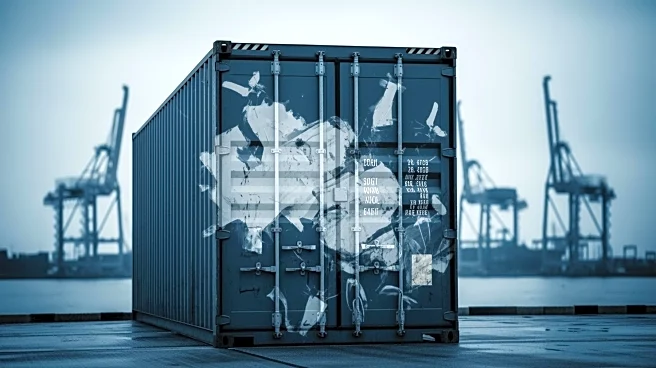
The latest Global Port Tracker report, released by the National Retail Federation and Hackett Associates, forecasts a decline in U.S.-bound retail container import volumes for the first half of the year. This decline is attributed to ongoing tariff uncertainties
and geopolitical tensions, particularly the conflict with Iran. The report covers major U.S. ports including Los Angeles/Long Beach, New York/New Jersey, and others. Despite a Supreme Court ruling against the use of tariffs under the International Emergency Economic Powers Act, President Trump has announced a temporary 10% tariff, with potential increases, under the Trade Act of 1974. The report highlights that while tariffs are intended to hold trading partners accountable, they also increase costs for businesses and consumers. The situation is further complicated by potential new trade investigations and the impact of geopolitical events on supply chains.
Why It's Important?
The projected decline in imports has significant implications for U.S. retailers and the broader economy. Tariffs increase operational costs, which can lead to higher consumer prices and affect retail sales. The uncertainty surrounding trade policies complicates long-term planning for businesses, potentially impacting employment and investment decisions. Additionally, geopolitical tensions, such as those with Iran, could disrupt supply chains, leading to delays and increased costs. The situation underscores the need for clear and predictable trade policies to support economic stability and growth.
What's Next?
The future of U.S. imports and trade policies remains uncertain. The temporary tariffs announced by President Trump are set to last 150 days, but their continuation or modification will depend on political and legal developments. The upcoming 2026 mid-term elections could further influence trade policy decisions. Businesses will need to navigate these uncertainties, potentially seeking alternative sourcing strategies to mitigate risks. Legal challenges to the new tariffs are expected, which could lead to further changes in trade regulations.