



What's Happening?
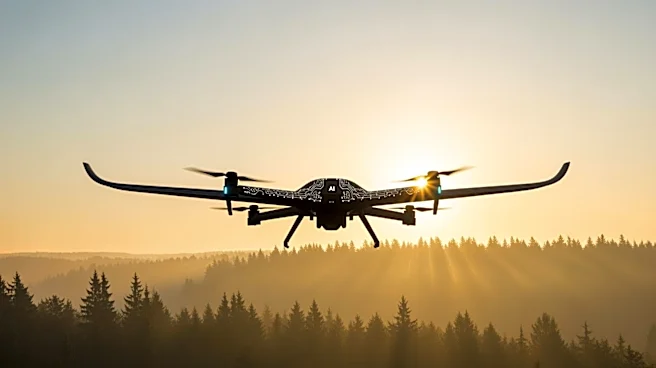
Makerfire, a global leader in industrial-grade drone hardware, has adopted the UTMSYS USX51 AI Computing Flight Controller. This advanced flight controller is designed for industrial applications, featuring stable flight control algorithms, high-computing
edge AI, and a safety-adaptive design. It aims to upgrade industrial drones from stable flight to autonomous decision-making, offering a cost-effective solution for industries such as surveying, security, and industrial inspection. The USX51 integrates the Pixhawk 6X flight control system with an AI module, supporting visual recognition and multi-target tracking. It is compatible with AI models like YOLO and MobileNet, ensuring precise operation in challenging environments. Makerfire's adoption of this technology is set to improve operational efficiency and reduce development costs for enterprises.
Why It's Important?
The implementation of the USX51 AI Flight Controller by Makerfire represents a significant advancement in the field of industrial drones. By enabling autonomous decision-making, this technology can greatly enhance the efficiency and effectiveness of low-altitude operations. Industries such as security, surveying, and industrial inspection stand to benefit from reduced operational costs and improved precision. The integration of AI capabilities allows for better data collection and analysis, which can lead to more informed decision-making processes. This development could also drive innovation in other sectors that rely on drone technology, potentially leading to new applications and business opportunities.
What's Next?
As Makerfire continues to roll out the USX51 AI Flight Controller, industries utilizing drone technology may begin to see significant improvements in their operations. The enhanced capabilities of the USX51 could lead to broader adoption of drones in various sectors, prompting further advancements in drone technology. Enterprises may need to adapt to these changes by investing in training and infrastructure to fully leverage the benefits of autonomous drones. Additionally, regulatory bodies might need to update guidelines to accommodate the increased use of AI-driven drones in commercial settings.
Beyond the Headlines
The adoption of AI in drone technology raises important ethical and legal considerations. As drones become more autonomous, questions about accountability and privacy may arise. Industries and regulators will need to address these concerns to ensure that the deployment of AI-driven drones is both safe and ethical. Furthermore, the increased efficiency and reduced costs associated with these drones could lead to shifts in the labor market, as some tasks traditionally performed by humans may become automated.