







What's Happening?
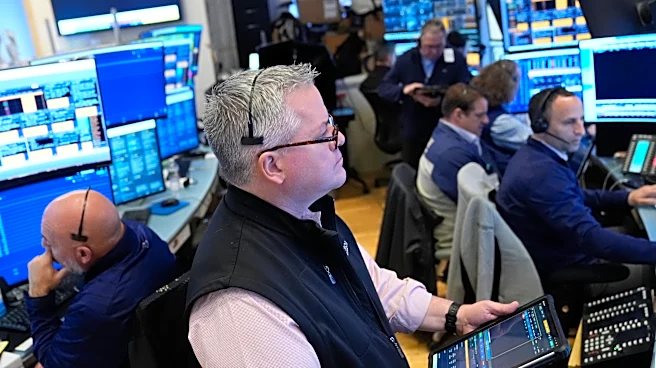
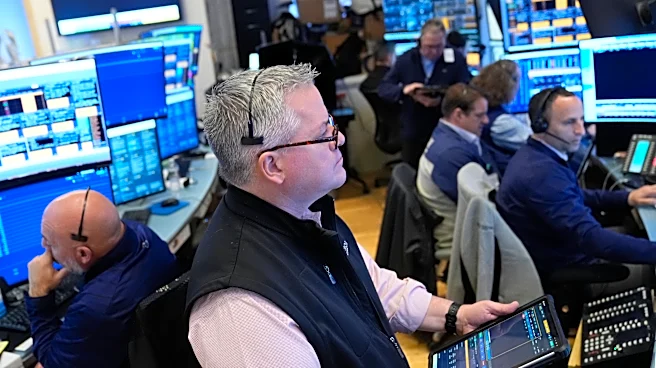
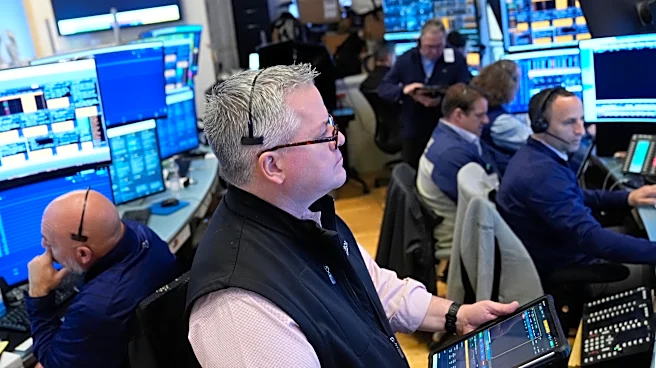
The Dow Jones Industrial Average experienced a significant increase, climbing by over 850 points, or 1.8%, following Iran's announcement that the Strait of Hormuz is open for commercial tankers carrying crude oil. This development comes amid easing tensions
between the U.S. and Iran, contributing to a positive performance in the U.S. stock market. The S&P 500 and Nasdaq Composite also recorded substantial gains, with the S&P 500 rising 1.2% and the Nasdaq Composite gaining 1.5%. The reopening of the Strait of Hormuz, a critical chokepoint for global energy flows, led to a sharp decline in oil prices, with Brent crude and West Texas Intermediate futures falling nearly 10%. This market rally is further supported by potential peace talks between the U.S. and Iran, as well as Iran's agreement to suspend its nuclear program.
Why It's Important?
The reopening of the Strait of Hormuz is a significant geopolitical development, as it is a vital passage for global oil shipments. The easing of tensions between the U.S. and Iran has provided a boost to investor confidence, leading to a surge in stock market indices. This development is particularly beneficial for the technology sector, which has been leading the market rally. The decline in oil prices could also have a positive impact on consumer spending and inflation, as lower energy costs can reduce expenses for businesses and consumers alike. However, the situation remains fluid, and any escalation in tensions could reverse these gains.
What's Next?
The potential for peace talks between the U.S. and Iran could further stabilize the region and provide additional support to the markets. According to reports, discussions could occur as early as this weekend. Additionally, Iran's agreement to suspend its nuclear program may lead to a reduction in sanctions and further economic cooperation. Investors will be closely monitoring these developments, as well as corporate earnings reports, which could influence market trends. The outcome of these diplomatic efforts will be crucial in determining the long-term impact on global markets and energy prices.