
What's Happening?
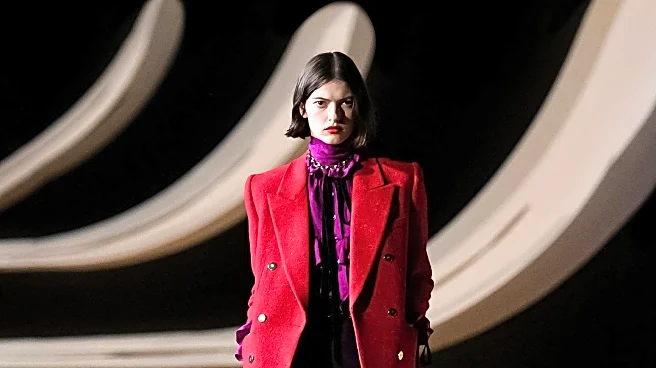
Marc Jacobs' Spring 2026 collection was unveiled at New York Fashion Week, showcasing a reflective and restrained approach to fashion. The collection paid homage to Jacobs' late friend, 'Louis,' and explored
themes of memory and loss. Jacobs' designs balanced restraint with a sense of hope, featuring updated '90s styles such as Helmut Lang-esque minidresses, skirt suits, and sequined tube tops. The collection also included personal notes from Jacobs, citing inspirations from past collections and designers like Yves Saint Laurent and Miuccia Prada. This introspective collection highlighted Jacobs' ability to blend nostalgia with contemporary fashion.
Why It's Important?
Marc Jacobs' Spring 2026 collection is significant as it demonstrates the designer's ability to adapt and evolve within the fashion industry. By reflecting on personal memories and past inspirations, Jacobs creates a collection that resonates with both nostalgia and modernity. This approach not only appeals to long-time fans of Jacobs' work but also attracts new audiences who appreciate the blend of classic and contemporary styles. The collection's focus on restraint and reflection may also influence other designers to explore similar themes, potentially leading to a broader trend of introspective and meaningful fashion in the industry.
What's Next?
Following the unveiling of the Spring 2026 collection, Marc Jacobs may continue to explore themes of memory and reflection in future collections. The positive reception of this collection could encourage Jacobs to further experiment with blending past inspirations with modern designs. Additionally, the fashion industry may see a shift towards more introspective and meaningful collections, as designers seek to connect with audiences on a deeper level. As Jacobs remains a prominent figure in the industry, his influence may inspire other designers to explore similar themes and approaches in their work.
Beyond the Headlines
The introspective nature of Marc Jacobs' Spring 2026 collection highlights the potential for fashion to serve as a medium for personal expression and storytelling. By drawing on personal memories and past inspirations, designers can create collections that resonate with audiences on an emotional level. This approach challenges the traditional view of fashion as purely aesthetic and encourages a deeper connection between designers and consumers. As the industry continues to evolve, the focus on meaningful and reflective fashion may lead to a more thoughtful and intentional approach to design, ultimately enriching the cultural and artistic landscape.