






What's Happening?
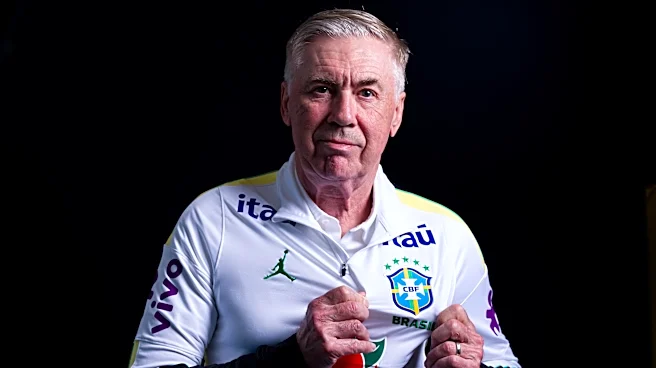
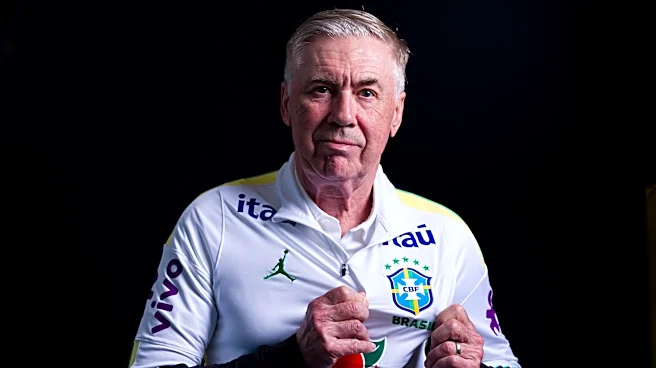
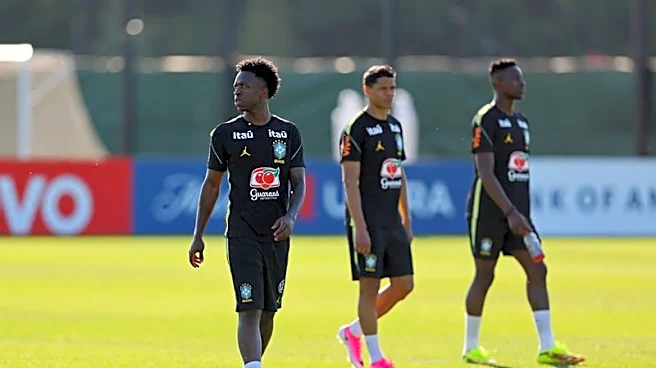
Brazil's national football team is gearing up for the 2026 World Cup with a focus on integrating player tracking technology to enhance performance and health monitoring. The team, led by head coach Carlo Ancelotti, is aiming to end a World Cup drought
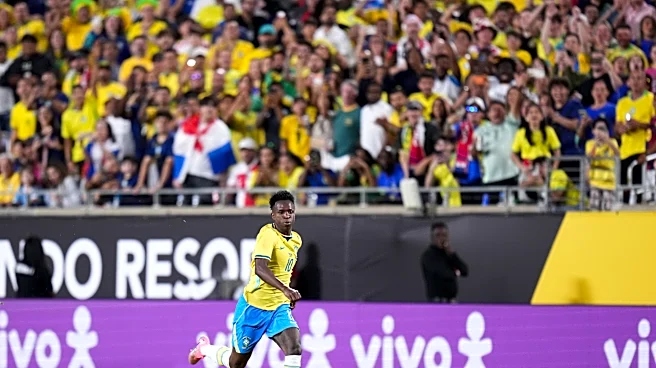
that has persisted since their last victory in 2002. Despite a talented lineup featuring players like Vinícius Júnior and Raphinha, Brazil faces challenges in adapting to the evolving physical and tactical demands of modern football. The team is also dealing with injuries, such as Neymar's calf injury, which may affect their opening match against Morocco. Ancelotti, who has had mixed success since transitioning from club to international management, is tasked with balancing traditional Brazilian flair with contemporary tactical strategies.
Why It's Important?
The performance of Brazil's football team in the 2026 World Cup holds significant implications for the country's sporting reputation and national pride. As the most successful nation in World Cup history, Brazil's ability to adapt to modern football's demands is crucial for maintaining its status. The integration of technology in player performance monitoring reflects broader trends in sports management, emphasizing data-driven approaches to enhance competitiveness. Success in the tournament could boost national morale and reinforce Brazil's position as a football powerhouse. Conversely, failure to advance could lead to scrutiny of coaching strategies and player selections, impacting the careers of those involved.
What's Next?
Brazil's immediate focus is on their opening match against Morocco, a team that made history by reaching the semi-finals in 2022. The outcome of this match will set the tone for Brazil's World Cup campaign. Ancelotti's strategic decisions, particularly in managing injuries and player roles, will be critical in navigating the group stage. The team's performance will be closely watched by fans and analysts, with potential implications for future coaching and player development strategies. Success in the tournament could lead to increased investment in sports technology and training methodologies in Brazil.
Beyond the Headlines
Beyond the immediate sporting implications, Brazil's World Cup campaign highlights broader cultural and economic dimensions. The use of advanced technology in sports reflects a shift towards innovation in traditional fields, potentially influencing other sectors in Brazil. The team's performance could also impact Brazil's international image, affecting tourism and global perceptions of the country. Additionally, the World Cup serves as a platform for showcasing Brazilian culture and fostering national unity, with potential long-term benefits for social cohesion and international relations.