






What's Happening?
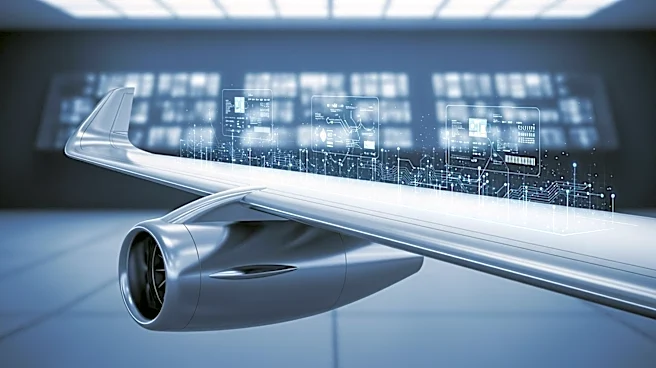
Boeing Global Services (BGS) is leveraging automation and artificial intelligence to improve productivity and safety in its operations. The company has implemented a system called the Automated Damage Detection System, which uses drones and AI algorithms
to identify defects such as missing rivets and corrosion on aircraft. This technology is being used at BGS's maintenance, repair, and overhaul site in San Antonio. According to BGS boss Chris Raymond, these efforts have already reduced cycle times by approximately 25% this year. The company is also exploring automation in its supply chain processes to handle large volumes of low-dollar transactional proposals more efficiently. These initiatives are part of Boeing's broader strategy to address a $33 billion backlog and enhance customer responsiveness.
Why It's Important?
The integration of AI and automation in Boeing's operations is significant for several reasons. Firstly, it enhances safety by reducing the need for manual inspections, which can be risky for workers. Secondly, it improves efficiency, allowing Boeing to address its substantial backlog more effectively. This is crucial for maintaining competitiveness in the aerospace industry, where timely delivery and safety are paramount. Additionally, the use of AI in supply chain management could lead to cost savings and improved accuracy in procurement processes. These advancements could set a precedent for other companies in the industry to adopt similar technologies, potentially leading to widespread improvements in operational efficiency and safety standards.
What's Next?
Boeing plans to continue expanding its use of AI and automation across various aspects of its operations. The company is focused on selecting projects that will have a material impact on business capacity and customer responsiveness. As these technologies are further integrated, Boeing may face challenges related to the implementation and management of AI systems, including ensuring data accuracy and addressing any unforeseen technical issues. The success of these initiatives could influence other aerospace companies to adopt similar technologies, potentially leading to industry-wide changes in how maintenance and supply chain processes are managed.