






What's Happening?
Gas prices have become a significant factor influencing American consumer sentiment, according to recent analyses. The University of Michigan's Consumer Sentiment Index has reached an all-time low, correlating with rising gas prices. A Business Insider
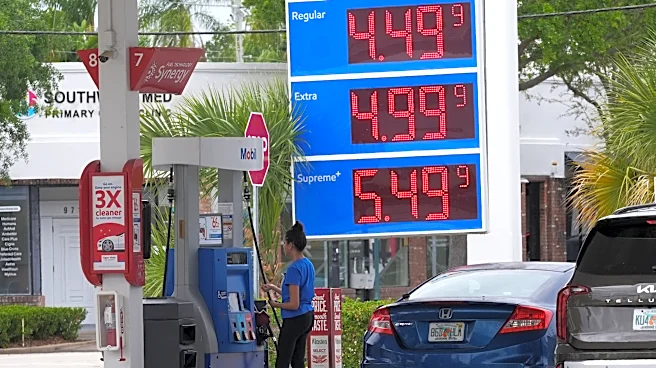
analysis highlights a moderate negative correlation between retail gas prices and consumer sentiment. As of early April, gas prices have surged to $4.12 a gallon, marking a 21% month-over-month increase. This rise in prices is attributed to ongoing geopolitical tensions, particularly between the U.S. and Iran, affecting global oil production. The visibility of gas prices, often displayed prominently at stations, makes them a key economic marker for many Americans, especially since a majority rely on personal vehicles for commuting.
Why It's Important?
The fluctuation in gas prices has broader implications for the U.S. economy and consumer behavior. High gas prices can lead to increased living costs, affecting disposable income and consumer spending. This, in turn, can slow economic growth as consumer sentiment declines. The geopolitical tensions contributing to these price hikes, such as the situation in the Strait of Hormuz, further complicate the economic outlook. Additionally, the impact on consumer sentiment can influence political approval ratings and policy decisions, as economic conditions are a critical factor in voter behavior. The reliance on personal vehicles for commuting means that gas prices directly affect a large portion of the population, making it a politically sensitive issue.
What's Next?
As gas prices continue to rise, there may be increased pressure on policymakers to address the underlying causes, such as geopolitical tensions and energy policy. Consumers might seek alternative transportation methods or more fuel-efficient vehicles to mitigate costs. The upcoming midterm elections could see gas prices become a central issue, influencing voter sentiment and political campaigns. Businesses, particularly those reliant on transportation, may need to adjust their strategies to cope with higher operational costs. The Federal Reserve might also consider economic measures to stabilize consumer sentiment and address inflationary pressures.
Beyond the Headlines
The rise in gas prices highlights the interconnectedness of global events and domestic economic conditions. It underscores the importance of energy independence and the potential benefits of transitioning to renewable energy sources. The situation also raises ethical considerations regarding the environmental impact of fossil fuel reliance and the need for sustainable solutions. Long-term shifts in consumer behavior, such as increased adoption of electric vehicles, could be accelerated by persistent high gas prices, potentially reshaping the automotive industry and urban planning.