

What's Happening?
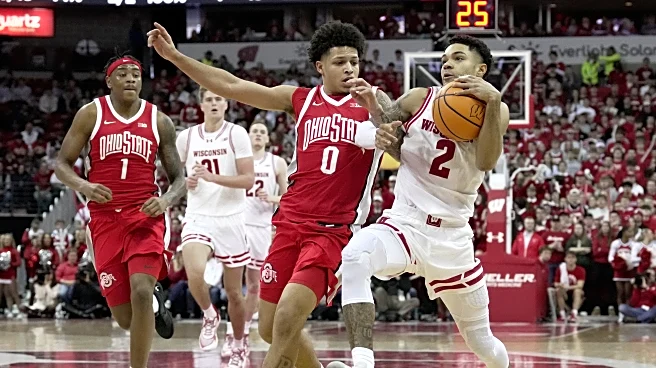
Labaron Philon, a sophomore guard for Alabama, is experiencing a significant improvement in his performance, positioning himself as a top-tier prospect for the 2026 NBA Draft. After a promising freshman year, Philon chose to return to college rather than enter the 2025 NBA Draft. This decision has proven beneficial as he has doubled his scoring output, improved his efficiency, and enhanced his role as a primary ball-handler. Philon's ability to finish at the rim and his improved shooting from deep have been key factors in his development. His performance has placed him among the top point guard prospects, with his ball-handling, court vision, and scoring touch being significant assets.
Why It's Important?
Philon's development is crucial for NBA teams seeking a dynamic
point guard who can contribute immediately. His improved performance not only boosts his draft stock but also highlights the importance of player development in college basketball. For teams in need of a floor general, Philon's ability to pressure defenses and create scoring opportunities makes him a valuable asset. His growth also underscores the potential benefits of players returning to college to refine their skills, which can lead to better draft outcomes and career longevity in the NBA.
What's Next?
As Philon continues to improve, his draft prospects are likely to rise, making him a potential lottery pick in the 2026 NBA Draft. Teams will be closely monitoring his performance, particularly his ability to maintain and further enhance his scoring and playmaking abilities. Philon's continued development in his pull-up shooting could significantly impact his draft position and future role in the NBA. His performance in the upcoming season will be critical in solidifying his status as a top prospect.
Beyond the Headlines
Philon's decision to return to college rather than enter the draft highlights the strategic considerations players face regarding their career trajectories. The rise of Name, Image, and Likeness (NIL) deals provides additional incentives for players to stay in college, allowing them to develop their skills while benefiting financially. This trend could influence future draft classes, as more players may choose to refine their abilities in college before entering the professional arena.