




What's Happening?
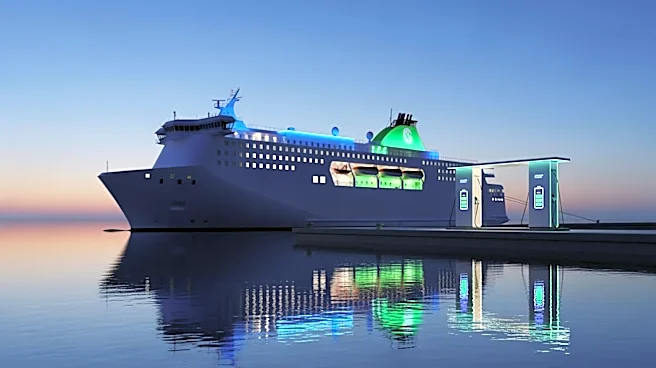
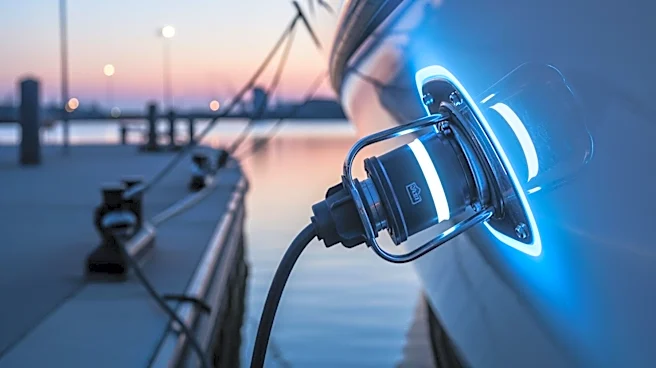
The maritime industry is witnessing a shift towards battery-electric propulsion systems for large ferries, as demonstrated by recent developments in battery-first ferry designs. Companies like Incat are leading this transition with vessels such as the
China Zorrilla and Molslinjen catamarans, which are designed for high-capacity vehicle transport using battery-electric systems. This move reflects a broader trend of electrification in the ferry sector, driven by the need to reduce fuel costs and emissions. The current fleet of large battery-propulsion ferries remains small, but the order book for new vessels indicates a growing preference for battery-first designs.
Why It's Important?
The adoption of battery-electric systems in large ferries represents a significant advancement in reducing the maritime industry's carbon footprint. This transition not only addresses environmental concerns but also offers economic benefits by lowering operational costs associated with fuel consumption. As public infrastructure, ferries play a crucial role in transportation networks, and their electrification can lead to cleaner terminals and improved air quality in coastal communities. The shift towards battery-first systems also highlights the potential for innovation in other sectors of the maritime industry, encouraging further investment in sustainable technologies.
What's Next?
The continued development and deployment of battery-electric ferries will depend on advancements in battery technology and infrastructure. As more routes become suitable for electrification, the demand for battery-first vessels is expected to increase. This trend may prompt regulatory bodies to establish new standards and incentives for clean maritime transportation. Additionally, the success of these initiatives could influence other segments of the shipping industry to explore similar sustainable solutions, further driving the global transition to cleaner energy sources.