






What's Happening?
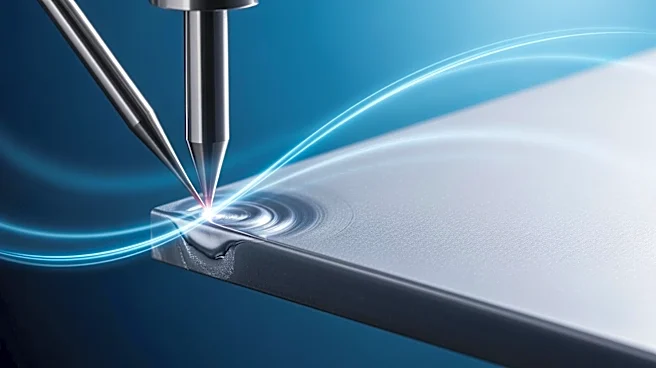
Researchers have optimized the laser cladding process of Inconel 625 on API 5L X65 carbon steel to improve microstructure and corrosion resistance. This optics-driven process controls melt pool dynamics to produce defect-free, durable steel surfaces.
The study, published in Scientific Reports, utilized response surface methodology to achieve precise control of cladding thickness and interfacial martensite layer, enhancing corrosion resistance and mechanical reliability for marine pipeline applications. The laser system used emits in the near-infrared range, enabling deep penetration and efficient energy absorption by the metallic substrate.
Why It's Important?
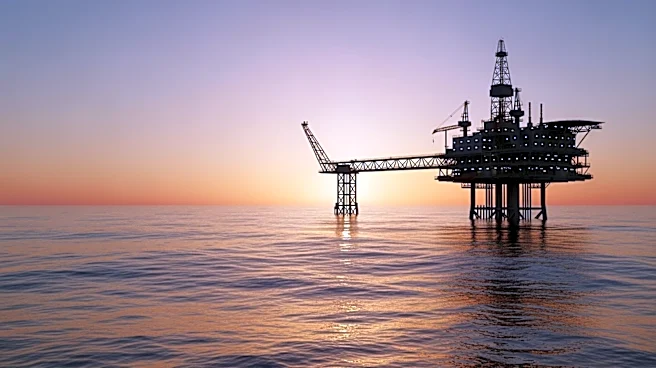
The advancements in laser cladding technology have significant implications for industries reliant on durable and corrosion-resistant materials, particularly in marine applications. By improving the quality and reliability of steel coatings, this technology can enhance the longevity and performance of pipelines and other infrastructure exposed to harsh marine environments. This development could lead to cost savings and increased safety in the maintenance and operation of marine pipelines, benefiting industries such as oil and gas, shipping, and offshore construction.
What's Next?
The study provides a framework for scalable, automated laser cladding processes, suggesting potential for widespread adoption in pipeline remanufacturing. The integration of precise optical control with feedback from thickness and microstructural sensors could lead to further innovations in material science and engineering. Future research may focus on refining the process for other materials and applications, expanding the technology's impact across various sectors.