






What's Happening?
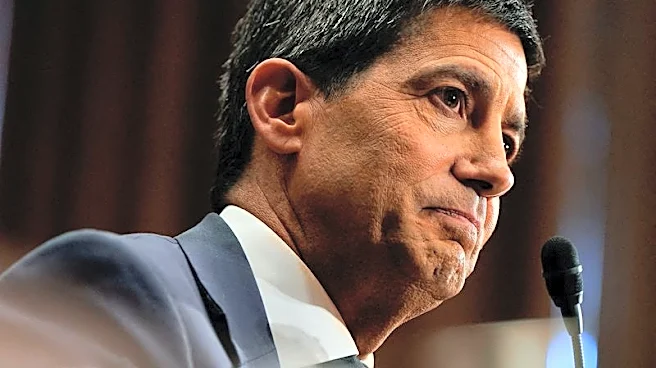
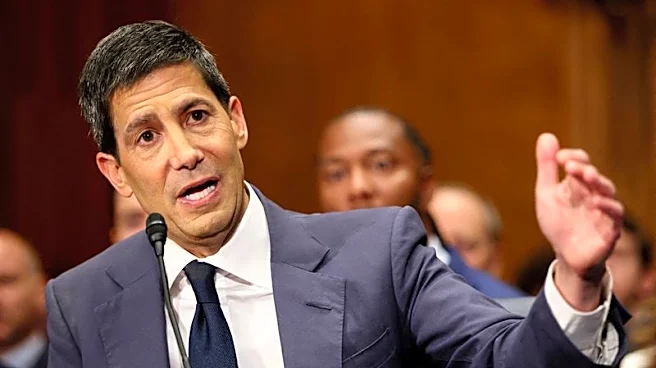
The U.S. Senate has confirmed Kevin Warsh as the new Chair of the Federal Reserve, succeeding Jerome Powell. The confirmation vote was largely along partisan lines, with only one Democrat, Sen. John Fetterman, supporting Warsh. Warsh's nomination has been
contentious due to concerns about his independence from President Trump, who has previously clashed with Powell over interest rate policies. Warsh plans to shift the Federal Reserve's approach to setting interest rates, focusing on small data shifts rather than median outcomes. His leadership comes at a time of heightened inflation, partly driven by geopolitical tensions.
Why It's Important?
Warsh's confirmation could signal a shift in the Federal Reserve's monetary policy approach, potentially impacting interest rates and economic stability. His leadership may align more closely with President Trump's preferences, which could influence decisions on rate adjustments. This change comes amid rising inflation, affecting consumer prices and economic growth. The Federal Reserve's policies under Warsh will be closely watched by financial markets, businesses, and policymakers, as they could have significant implications for the U.S. economy.
What's Next?
As Warsh assumes leadership, the Federal Reserve's policy direction will be scrutinized for its impact on inflation and economic growth. His approach to interest rates could affect borrowing costs, investment decisions, and consumer spending. The central bank's actions will also be critical in managing the economic fallout from ongoing geopolitical tensions. Stakeholders, including businesses and financial institutions, will need to adapt to potential changes in monetary policy under Warsh's tenure.